Revenge of the Christmas Trees

Recurring respiratory ailments at Christmas time is now being attributed to a mould on Christmas trees! What a good reason for you not to have one in the house if you are tempted, fearing it may be a step too near assimilation into western ways. But you can always drape the coloured lights outside on a tree, as many people across Europe do and I must admit it does cheer things up at a time of the year in England when it is overbearingly grey. But in the multicultural Britain of 2011, this time of year always seems to highlight religious differences. But this really shouldn’t be the case as I see it as an opportunity for some smart bridge building.

Dr Muhammad Tahir-ul-Qadri, a highly regarded and very popular scholar from Pakistan makes out a very good case for Muslims celebrating Christmas as a mawlid for the Prophet Isa, alayhi salaam, as this negates the Christian assertion of his godhood in that he was born and created as a man. In fact Dr Muhammad advocates a mawlid for any prophet or friend of God. He adds that in fact every jumu’a prayer is a mawlid for the prophet Adam as this was the day of the week he was created. After all, muslims celebrate Ashura on the 10th of Muharram, which originally was a Jewish festival remembering the day when Moses defeated the Pharaoh. Had Islam originated in a predominately Christian culture no doubt we might have absorbed some Christian festivals.

As someone who grew up around all the trimmings of a typically 1950s English Christmas I would say there were plusses and minuses. It was magical, a time of presents, carol singing, a large family gathering but also with a good measure of over indulgence and eventually sibling quarrelling, some indigestion and usually a frantic mother left for too long in the kitchen. As my parents were Quakers there was no heavy drinking; a bit of sherry in the morning and cider at lunch was as far as it went. It jollied things along. The typical Victorian style family Christmas in other words.

Now jump ahead 50-60 years and we have a quite different landscape where few people actually know what they are celebrating anymore and a time of great unhappiness for some. Participation in religious Christian worship is much much less than it ever used to be, with open atheism quite a common thing in what has become, in the UK, a quite secular materialistic society. No-one can deny that Christmas has become a massive commercialised binge on which it seems the fate of the nation’s economy now hangs! But on the edge of it all are families of other faiths testing the waters, wondering if Christmas means anything to them.

People like myself, who came into Islam in the early 1970s in London, were faced with quite a brutal ‘reconditioning’ by our first teacher. Christmas was presented to us as the ultimate ritual of godlessness, the usurping of the pagan festival of the birth of the Roman sun god, by the Catholic church many centuries ago. So we had to be reprogrammed. Our group of young muslims at the time were forbidden to visit their families and instead we all went into a three day retreat in our zawiyya. Our zeal was unmatched anywhere and we really thought highly of ourselves and how revolutionary we were. I’m not saying a bit of re-programming was not necessary after the crazy decade of the 1960s but in hindsight I do think the method was harsh and misguided. Our then teacher was not a family man and he considered all of our character faults came from our various family upbringings – a fashionable theory of the time promoted by psychiatrists like RD Laing – and that Christmas was central to the illness. It was curious, as our venerable Shaykh in Morocco had stated quite clearly to us fledgling muslims, that we had two Imams: Muhammad and Jesus, on them both be eternal blessings and peace, which suggested a degree of tolerance of our Christian past and some respect for our parents, the family being by tradition, under the Throne of God and non-negotiable.

After that social experiment all broke up in the early 1980s we managed, as a family, to find a much more natural way, as muslims, to deal with Christmas. We would cook a turkey, as this was the only time of the year you could buy halal birds, and invite friends around for a big meal. At Christmas in the UK the whole world closed down around you and there was little else to do. So this became a yearly event and we have had it most years for over 20 years now.  Often there were travellers passing through, Bosnian refugees, families who weren’t celebrating anything and just people we knew who were living alone. The English winter is very depressing at the best of times and people need uplift … good company, pretty lights and good food – a little bit of joy. But the intention was everything. We were certainly not lurching back into the ways of the past. On one occasion in the 1980s I had seen fairy lights at a Pakistani mawlid in the north of England and realised then that it was time to reclaim these things for ourselves. So now at Eid time and Mawlids, out come the fairy lights (but no trees!). We just needed to remember how to enjoy ourselves and climb out from under the mantle of puritanism that some new muslims seem to embrace.

These Christmas lunches we continue down in Spain where we now live, even though Navidad, as it is called, is not a big deal here. Jan 6th, Tres Reyes (three kings) is always a bigger festival. Even though we don’t have the dark northern winters (quite the opposite in fact) it still makes a lot of sense as people need an excuse to come together at the nadir point of the solar year. I know that in muslim communities there is a lot of resistance to Christmas, but I just wonder if we have to rethink it all and have a change of heart.
Posted in miscellaneous | Leave a comment

2012 is Coming, Enjoy every Second


The title of this post was an advertisement I saw in a magazine whilst waiting in my local Spanish peluqueria the other day. The ad, 2012 is Coming, Enjoy every Second, was for a wrist-watch! Quite clever you might think. The image was of a giant meteor hurtling towards a city of office towers all lit up at night. Also depicted was a young couple in a suggestive clinch. Trading on the apocalypse is an interesting new departure for the advertising industry, but symptomatic of this time. There’s been a lot of it around. Like, for instance, Hollywood movies like 2012, The Day After Tomorrow and even my locals dropping hints about the Mahdi coming, peace on earth and the likelihood that 2012 might not actually happen! Advertisers have always picked up on the zeitgeist but this is new and a sign of how deep the fear has percolated.

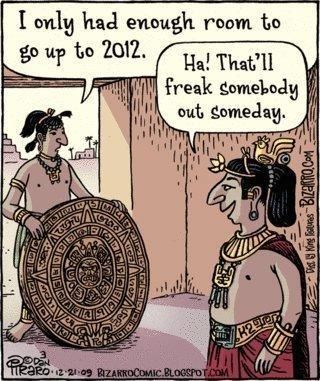
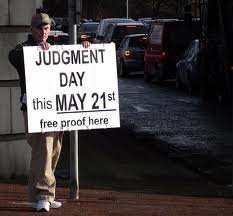
But this is not new. There have been soothsayers and Casandras down the ages who have predicted the end of the world anytime soon! It’s seems to be a response built into our human DNA i.e., to have fear of an ultimate cataclysm after all, we, as a species, are distinct from animals in that we have knowledge of our own death. In the 1960s you could espy everyday a man walking up and down Oxford Street in London carrying a giant placard reading “The End of the World is Nigh, Eat more Protein!”. Since then, various spiritual teachers of many different persuasions have warned their flocks that the expected end was due, naming a date and even a time and to depart for the high plateau with their families and possessions. The recent millenium was one of them. I won’t enumerate these spiritual groups or cults as there are so many but I am more interested in why there is a general upsurge at this particular time. Fed by the predictions of Nostradamus or the Mayan myth (or the misunderstanding of this myth – see cartoon below) and the various and many descriptions in the Prophetic traditions there has been a lot of talk. A lot of smoke but not much light.

Well known is a story of one of the sahaba – a companion of the Prophet. He asked the Prophet, peace and blessings be upon him, “when is the hour?“. The Prophet’s response was not to predict a day or a year but to say “What have you prepared for it?”. His advice was not to passively wait around for it, or even not to fear it, but to ask him a question about his active response to it. If only this almost palpable public fear that is around could meet with this kind of counsel, as right now it seems to be being brushed under the carpet.

If one was to examine the pronouncements of a guru, shaykh, whoever might be predicting the end, you would have to suppose that it was for a reason, a wish maybe to subdue their followers or maybe a well intentioned warning but without the Prophetic counsel illustrated above, disingenuous in my opinion. Fear after all is a great way to control people. So what happens when the fateful hour never arrives? Like the great millenium non-event. Red faces all round but did the followers turn round and say “we were cheated” or were they even a teeny bit embarrassed? No doubt some were disappointed. I’m interested to know their response as I have never heard it.

When Mount Vesuvius exploded and suffocated the city of Pompeii and Herculaneum in Italy under volcanic ash in the year 79 AD, it was evidently the end for 4000 of its inhabitants. Equally for Hiroshima, Nagasaki, Dresden, and Hamburg when fire destroyed hundreds of thousands in a matter of minutes. It occurred to me that there has been an increase in natural disasters and loss of life, like the the two great tsunamis, in the last decade, but compared to the last century not much in comparison to the multi-millions of deaths in its two great machine wars. If you consider that your own death is your own personal end of the world then, yes, the end of your world is nigh. Like possibly in the next ten minutes. Maybe the end of the world is really billions of little Ends of the Worlds. But one can only speculate. Biblical and Quranic descriptions of an ultimate apocalyptical cataclysm are mysterious but quite detailed – if there is a beginning to creation then there is most certainly an end to it. Why not? What has a beginning has an end. Doomsters often neglect to point out that the signs of the end of time have been around for a very long time – thousands of years in fact.

I’m sure when the people of Medina, in the year 1256 CE, heard of a great molten volcanic stream heading towards them, they considered it was the end of their world and a punishment from the Almighty. It is said that the night was so bright from the lava that you could read a book. Only their supplications and rapid repentance and of course the presence of its greatest resident turned the great stream of molten lava away from the city, actually uphill. The evidence is still there to this day some 12 km south east of the city. The lava tract is 70km long and 20km wide and is illustrated above (photo by Nabil Turner). Like Pompeii, these signs are there to remind us of how the end can come swiftly to some people but also how the ‘end’ can possibly be averted or at least postponed if people change their ways.

The end of time is very visible in Quranic and Hadith sources and I am no expert but I know out of choice many scholars of eschatology hesitate to discuss the subject, much as they wisely hesitate to go into stories, truths, rumours and myths about the Mahdi. Modern muslims who I have met remain confused about these subjects but all will have an opinion one way or another. The prophetic guidance is to assume that tomorrow is maybe your last but that if you were planting a tree, to continue planting it. Better, it seems, to be pre-occupied with positive action than to be mesmerised by speculative fear.

Posted in miscellaneous | Tagged , , | Leave a comment

LOL

Since starting this blog I know how jounalists feel who have to keep a weekly column going week after week, inspiration or no inspiration. So that they end up filling their columns with anything they can muster and often revert to ridiculous tittle-tattle about their dogs or confessional details about their own family secrets. I suppose if you get paid to do it you will find something to write and some journalist do pretty well at this.

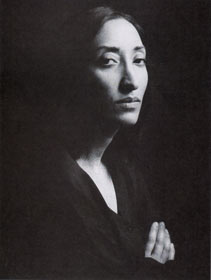
I found Shazia Mirza’s column in the Guardian (last one in December 2010) actually very funny – funnier in fact that her actual stand-up shows which I have seen, but in which I thought she went on too much about facial hair! She is funny, but funnier I think when in the written word for some reason. You can sense that underneath her on-going friction with her family there’s actually a lot of love. Some time ago I emailed her to ask her whether she just invented the stories in her column about her family as they seemed so unbelievable (this was mostly what she wrote about), but no, it was all true she said. It got me thinking about  muslim comedians in general. I don’t mean imams with hooked hands or bufoons doing battle with western decadence but ones who actually are genuinely funny.

Stand-up bass player. Stand-up comedian.
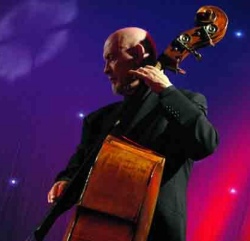
I mentioned Danny Thompson in my last post, who is well known as a virtuoso bass player who has accompanied just about every singer or musician you can name over a lifetime of professional work, touring and recording from Donovan to Rod Stewart via Nick Drake, Peter Gabriel and an endless list of musical stars. But also a muslim who takes it seriously.

He’s from Lambeth in South London and I’m not sure if he qualifies as a true Bow Bells cockney but he seems, to my ears, to have all the authentic patois. He likes to talk to his audience in concerts between songs and he is funny, in unexpected ways. To the extent that you would be forgiven for thinking he was a comedian doing a musical side-act. For instance, he will tell a personal story about himself to his audience which would lead them gullibly totally up the garden path, dropping them like a brick at the end of the story having told a total porky or just weaving his life into a pre-planned joke. He did it to me many times. He was as perfect a practitioner of rhyming slang as you will find anywhere south of the Watford Gap and a good china of mine. But unlike Shazia he doesn’t make jokes about muslims, as for him I doubt he finds anything funny about it, although I should add that Shazia’s humour about muslims wouldn’t or shouldn’t offend anyone. With a lot of self-satire she punctures cultural hypocrisy and religious humbug, which is much needed in a country where people are are trying to be just a little bit too correct. How people behave can well be the subject of humour as long as you don’t target peoples’ beliefs. It seems if you grow up in a muslim family the likelihood is that you will find a lot to laugh about, as religion plays a much bigger part in such families than in the typical secular British family. Religion will always be a subject of humour as it is a way people deal with their repressed real fears about life and death, marriage and children etc., which religion of course is all about and offers at root, explanation, consolation and of course salvation, we hope. Repressed emotions are always the target of humorists – the unspoken about uncomfortable truths. The fine line is crossed of course when you start to mock individuals or the religion itself. That pretty much conforms with the Prophetic example on humour as he, God bless him and grant him eternal peace, we know was very humorous, but never mocked people. Scholars have written whole books on Prophetic humour, none translated into English to the best of my knowledge, and is as important a part of his way as anything else of his. But when people lack humour – er, they lack humour. The term humour actually derives from the humoral medicine of the ancient Greeks, which taught that the balance of fluids in the human body, known as humours (Latin: humour, “body fluid”), control human health and emotion. So it is of vital importance to our well-being. So laughing out loud is good for you. But getting the balance wrong could be bad. So watch your step.

Some of my readers here might also be familiar with American muslim comedians Preacher Moss and Azhar Usman who comprise the comedy act Allah Made Me Funny. I saw them perform at the Islam Expo a few years ago in London. I must admit that Azhar’s particular kind of American humour didn’t really connect too easily with the admittedly cold UK audience as they didn’t really grasp the in-your face American style of comedy but African-American Preacher Moss did a lot better. He was just funny from the word go as he had the kind of timing the British do appreciate even if they don’t get his American references. Better not to advertise yourself as a religious comic I think, as it gets you off on the wrong foot. I talked with Preacher Moss and Azhar in the hotel where we staying near the Expo into the small hours and I have never laughed so much – in a hotel that is.

Understanding diversity and multiculturalism requires that we eliminate or reduce the anxiety of our ignorance and how to speak honestly when we can’t.” -Preacher Moss

Check the clip on this page:  http://www.youtube.com/watch?v=t2UslHb1TOg

Comedy is actually a very difficult art. Most comics seem to gain fame by means of shock and profanity and that is not something new but it’s a mistake to define your art in religious terms as if it will give you a leg up or some more credibility. Better to be just a good musician or and/or a good comic and let your beliefs percolate through your music or your comedy.

There are so many Jewish comedians who publicly explore the angst, neurosis, guilt and conflicts of being Jewish that I couldn’t number them here. Jackie Mason is one who is an ordained rabbi and a famous comedian as well. Azhar Usman mentioned above I believe is a trained imam. There must be a comedic Christian vicar somewhere. I’m no afficianado of the subject but one is all too aware of the whining but clever humour of Woody Allen and his social observations. Some loathe his New York humour and others love it, but you can’t fail but notice that he makes continual references to his Jewishness in almost every movie in a love-hate kind of way. And he often descends into a squalid self parody as he explores his own adulterous fantasies. It’s interesting that Muslims find it hard to sink to this level although Omid Jalali, who can be hysterically funny, gets near it at times. The film The Infidel (which starred Omid) broke all sorts of taboos in its treatment of Jews vs Muslims and Salafis vs the rest, which I thought quite healthy in the UK context, but to do this it also sank to a pretty low level. But I think he is sincere and speaks the truth when he can. He’s kind of big and cuddly. I felt mildly exhausted after that film as I do after many comedies as there is always the danger that laughing can leave you feeling quite spent. Which is why I have always loved the gentle genius of French director/actor Jacque Tati who never mocked people in his very light comedic movies like Monsieur Hulot’s Holiday and Jour de Fete. I’ve seen every film he made and they all leave you just feeling bemused and happy – they are not hysterical, but whimsical and humane observations of ordinary French society. Jewish comedy seems to have no limits to how low it can go which is why it has the been the fuel of many a Hollywood feature film. Breaking taboos has been their only means of getting a laugh but that just sinks the ship lower and lower in the water.

For me some of the best muslim scholars and speakers edge very near the standup comedians’ territory as such sensitive subjects as religion are perfect for turning a humorous phrase or lancing the tension that serious people bring with them to the religious conferences which we have all been to. After all, a standup comedian is rather like a religious preacher, exhorting people, like Preacher Moss’s rich observations – one seeking to awaken the spirit of the audience and the other to get a laugh. Some can do both. It seems only one chromosome separates them from each other. As I remarked in my previous rant about PA systems, all that magic is amplified now through gigantic speakers, massive video screens and of course disseminated to the world through TV and the internet. It’s powerful stuff.

Posted in miscellaneous, music | Tagged , , | 5 Comments

Goose pimples in Sarajevo

Today’s post is a special treat which I hope you can share with your friends. You will find here an (edited) chapter from my very own as yet unpublished bio (Average Whiteman) about a concert in Sarajevo fourteen years ago in 1997 that Yusuf Islam and myself appeared in.  I’ve also loaded up an mp3 of one song – Tashaffa Ya Rasulallah -from that concert that I sang with Burhan Saban, a wonderful singer and hafiz from the famous madrasa in Sarajevo. Burhan only heard this the day before the concert and does this amazing heart-rending prayer at the end. If there is a good response from this I can try to get the rest of this remarkable concert released as a CD or whatever. But do tell me.

Tashaffa Ya Rasullalah

Average Whiteman 254-260 edit

Posted in miscellaneous, music | Tagged , , | 21 Comments

Maqamats, Sacred Geometry and the Celestial Worlds

For years I have tried to understand what the maqams are (or maqamats, known as nawbas in Morocco) and I hope these few words here don’t confuse things further. In these posts I have always sought out subjects where the global homogenisation of culture is forcing out the subtler and more indigenous remains of previous traditions – things which enrich and complete the human experience whether language, calligraphy, art, architecture or music. A great loss to us all and future generations. This mode of music is one of the things being pushed out by rigid modes of western harmony. But first I want to step back a bit for a more general view of things.

Sacred Geometry
In my early years I was very conditioned against the concepts of sacred geometry by views instilled in us in the early 1970s. We were taught to view it as a kind of masonic Schuonian conspiracy. Since the drugged days of the 1960s when things like numerology were the rage, I have been a bit suspicious of mathematical explanations of the universe as the truth is that it left us all confused. Like the teachings of Gurdieff and Ouspensky, it was all redolent of higher realities but in fact left you amazed, but helpless, with no prescription of what to do.

A few years ago I saw a short lecture in Granada by John Martineau, publisher of Wooden Books, about sacred geometry and I revised a lot of my opinions on the subject. He expounded on the empirical geometry in creation from flower forms to shell formations and crystal structures – the undeniable geometry underpinning, well just about everything. A recent BBC TV series called The Code presented by Marcus du Sautoy also explored the mathematics of everything in existence as the key to understanding it. Whereas John Martineau suggested a new interest for me in divine mathematics, Marcus Sautoy left me quite uninspired with little understanding of it. The Code was a triumph of form over content with admittedly stunning computer graphic presentations but nothing that really moved me or got to the nub. What both Martineau and du Sautoy had in common was that they described well something fundamentally true except that they shied from talking about the root truth which is what I was looking for. In this, they share where modern science leaves us all short changed. Like the Hadron collider, the multi billion pound white elephant buried in the ground under the French Swiss border, it may unveil secrets about the stuff of what we perceive as solid matter but seems likely to leave us none the wiser about what it all really means. This vast subterranean tomb will deeply puzzle future archeologists whose only explanation will be that it was an underground 28 km greyhound race track.

Such divinely ordained things as the Golden Section are remarkable in that they seem to underpin beautiful proportions in the natural world as well as man made creations in art and architecture. I only digress into geometry here to illustrate how I also perceive the musical maqams by analogy. Empirical geometry – empirical musical harmonies. The golden proportions of musical harmony. I have no proof for this but I have hunch that the maqams are what the Pythagorians called the music of the spheres. These are harmonic sequences which are empirical, in other words they are not man made. They have pre-existed everything and permeate all of the created universe which includes us.

Maqamats
Pythagoras connected the harmonic relationships of the earth and the celestial bodies with musical harmony and beauty and so should we with the maqamats. The origin of the maqamats is not known but my assessment is as follows. Most of us in western cultures understand the difference between the moods of major and minor keys. These are two modes which we are preconditioned to respond to. Minor – sad. Major – happy. Now imagine many more modes which we are capable of responding to involuntarily but which right now we are not familiar with. This is the clue. Given this we can enter into a new universe of musical experience. Not the arbitrary emotional and horizontal imaginal worlds of western musical composers but something truly celestial and in harmony with something greater than the human self and a form of worship in the right situation. This music is not one of sensuality but one of elevated and inspiring beauty. It is not some cold mathematical world either but one which unlocks the heart and its secrets. This understood, western music can still inspire and unlock incredible zones of emotional experience which can be beneficial but may not be very pleasant sometimes in its inner evocations, like the music of Wagner. But it can be a window into the world that produced that music and musically very moving. But it is not celestial music.

Music is for some a difficult territory. For reasons of culture and religious legal opinions, some people have forbidden it to themselves and their communities. I have never visited India or Pakistan but I know that some sublime music has come from the subcontinent and this aversion to music appears to be something that lives mostly in expatriate communities in Europe or wherever. This is a touchy subject and I have always tried to be understanding of others’ restrictive views but I get frustrated that it’s all looked at in a black and white fashion. I’d better say a few things here before anyone reading this shuts me off  and before I get back to the subject of maqams which is what I really wanted to write about.

Like language, music can be profane or sacred, and it springs from whatever the intention is. George Martin, erstwhile record producer of the Beatles, (who I briefly worked with in the 196os), is famous for saying there’s only good music and bad music. And I’m with him there 100%. Music has been a huge part of my life and I know it inside out from Thomas Tallis to Verdi by way of Tamla Mowtown and John Coltrane from Gilbert and Sullivan to British Folk Rock and Classical Andalusi Maghrebi music, both as performer, writer or audience. Forgive my pun but music underscores western civilisation, as it has my own life, in the sense that it gives you an emotional taste of a period of time that has gone and timelessness in the case of timeless music. And you can learn from that. But with mass commercialisation of music it is not what it was and in many ways I enjoy more and more silence and the sounds of nature as there is too much pointless music around, horribly amplified, unconnected to meaning or context. Music in cars, radios, TVs, ipods, supermarkets, planes, hotel foyers, ringtones – absolutely everywhere.  Just too much. The real power of music is not now understood, having become another commodity to be exploited for a quick dollar. Much as I love music I’d be the first to warn of its dangers but also the first to advertise its huge benefits. But no reason to ban it. You would need an Inquisition to do that.

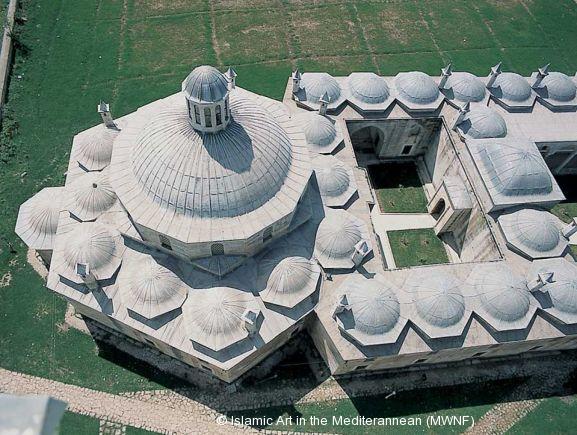
On the plus side music (singing included) can elevate the spirit, provide a release from stress and even be applied as a therapy for psychological and physical illnesses. Music therapy, was /is something specifically related to the maqamats and well known to the Ottomans and the Andalusians as it restored some kind of harmony, with the use of mainly instrumental music, to disturbed souls. Whilst maristans in both east and west were dedicated to this treatment in times past, it is now almost a forgotten science. Something well worth reviving. There is a quite a bit on the web relating to this subject and its revival in Turkey.

Dar-ül Kurr’a Madrasa, Erdine, Turkey. This hexagonal building was dedicated to music therapy as well as hydrotherapy in Ottoman times.

The maqamats exist in many musical cultures: in Egypt, Syria, Western China, Turkey, India and of course Morocco, Algeria and Tunisia. They share much of the basic maqamat harmonic sequences and have very similar names but reflect the local musical traditions and to the uneducated ear can sound quite unrelated. I can’t claim to be an expert on this but am exploring this intuitively from what I do know from 40 years practical experience of Moroccan qasaid.  I do know that Ziryab brought this musical science from Baghdad to Cordoba where he created the great Andalus maqamats blending Arab music from the Persian courts with Iberian music, Christian and even Jewish music of the peninsular. It left Spain for north Africa after the overthrow of Granada but only half of it is left extant passed down through families and now taught in conservatoires.

http://www.maqamworld.com/ is an interesting web site dedicated to explaining the modal system of arabic music. Worth a visit but it might be just a bit complicated for most people. And pity its interactive bits don’t work on a Mac. It’s pretty difficult for the western mind to wrap itself around the concepts involved on the site but it’s useful as a reference point.

Posted in miscellaneous, music, typography / design | Tagged , , , | 14 Comments

Write it! Sing it!

Where I live there are so many alternative therapies on offer up and down our valley. They include such things as underwater ti-chi to sacral osteopathy, magnet therapy, raw food cults etc., and many you have never heard of before. So one more may hardly be noticed. But I have happened upon what I think could be called quite legitimately a therapy and offer it along with the rest. It combines calligraphy and singing. Two quite different activities but when combined they have a dynamic and beneficial effect. This is why.

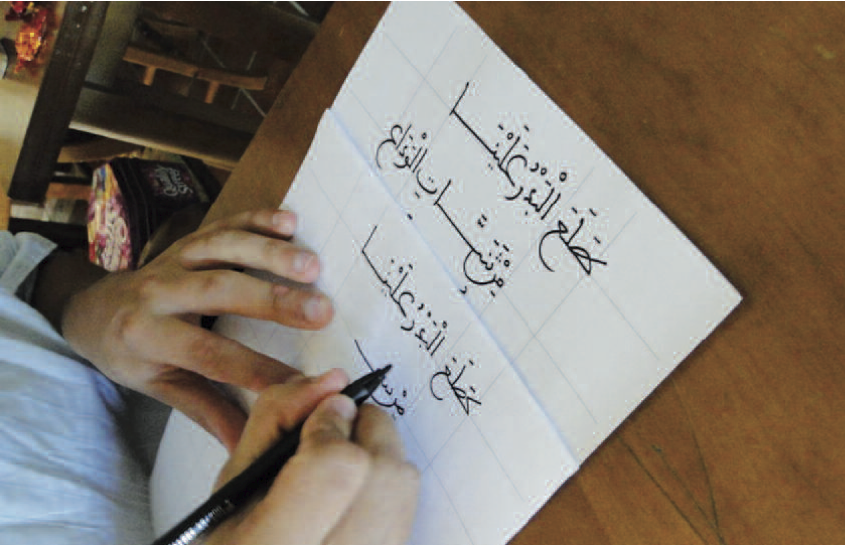
I have conducted a few Andalusi calligraphy courses down here in southern Spain in Andalusia over the past 8 years and they  consisted of teaching students, who claimed no previous skill in this field, to write very simple calligraphy of an old arabic poem in this ancient Andalusi script (pictured above). This kind of writing had previously come to an abrupt halt 500 years ago in Spain when arabic was banned by Ferdinand and Isabella, the conquerors of Granada. You had to face the Inquisition if you were found speaking arabic, writing it or owning books written in it. They piled the books high in the streets and squares and burnt them all. Burning people in auto de fes came afterwards. So writing in this particular style was like reconnecting the nerve endings of a civilisation brutally severed from its roots.

These courses would be held over a period of a few days with each student copying from an existing calligraphic sample. Calligraphy is by its very nature an exercise in hand eye coordination and requires stillness, neatness, concentration and awareness – brain activity in other words. The slightest tremor of thought is registered immediately on paper like some kind of seismometer indicating shivers in the earth’s crust. For people habituated to phone-texting and computer keyboards and the ever present TV remote, this can be challenging but with patience the struggle yields results. For people suffering low attention spans it can be a gratifying exercise as it produces good results quickly. Often as good as the sample being copied. Indeed I had students who after one day were producing good copies of this ancient arabic script, who previously had no experience with a calligraphy pen. It’s the beginning of an enjoyable process of self discovery. But it didn’t end there.

Come the evening the students would then meet in the enormous mosque attached to the Rosales madrassah (above), where the course was being held, to sing the poem which in the day time they had been copying. Write it! Sing it! was my slogan. The mosque had great acoustics which enhanced the voices. The act of singing is of course a totally different kind of exercise from calligraphy, requiring intense use of the lungs and the voice, two functions very closely connected to the physical heart. A voice coach trains the human voice using certain exercises, one of which is repeated strong out-breaths like that of  the sacred dance of some sufi brotherhoods. This strengthens the diaphragm and exercises the lungs, emphasis being placed on completely filling the lungs. Most people only use half their lung capacity and only by consciously lowering the diaphragm can full lung volume be reached. Hyper ventilation  can result but is not the point of it and is probably caused by incorrect breathing in the first place. This exercise is used by voice coaches to help people sing in tune and ultimately to have perfect pitch. So we would perform some of these exercises before trying to sing. And singing in tune is a real problem for people who have grown up in some Asian communities in the UK where music has not been encouraged or even allowed in the home and where things like singing and keeping time in a rhythm prove almost impossible to do.

Singing in tune in other words is not a psychological process but to do with developing physical harmony and well being. These two opposite activities of writing and singing seem to create an alchemy which produces nothing but good and is evidenced to me by people becoming happier, more relaxed, confident and expressive – even ecstatic in some cases. For some it was like seeing some insect unfurl its wings as it emerges from a long hibernation. Of course singing the poem in classic old Andalusian tunes was similarly reconnecting with a thousand year old tradition that only survived by retreating to Morocco where it carried on as a living tradition till now. This was the great ouvre of music that Ziryab created in the time of the Caliph Abdarrahman III in Cordoba a thousand years ago. It drew on Christian and Iberian music but was was based around the great maqamat tradition Ziryab brought from Baghdad. The maqamats are rather like the concept of sacred geometry but applied to sound, which you will find embodied in the music traditions of Turkey, Syria, Egypt and India – even China (and of course North Africa). They are God given harmonic sequences around which the melodies are composed and have probably existed in many previous civilisations. These harmonic sequences are known to have deep healing properties, especially for people with mental disturbance but also for people with just physical ailments. Music therapy is a fascinating area which it is worth making another post about as it having a revival in Turkey and needs reviving as a science.

As I said there is no psychology involved in recovering the ability to sing in tune and to beat a time in a rhythm. A healthy happy person will do this naturally from a very young age. But bringing these two traditions together which once flourished in Andalusia, is clearly a potent thing and is more than just any old singing and any old calligraphy. It has secrets. It’s a medicine and it’s recreation as well. It is is worth adding that in these times, people in the west generally sing much less than previous generations. It may have been hymns, or even great choral works by JS Bach or Verdi that we sang, even madrigals and folk songs or just standing round the piano singing pop songs. But it was singing. We enjoyed it.

The modern lifestyle does all it can to take us away from these kind of activities. It wants the masses to consume culture, not participate in it. It discourages ordinary people from artistic expression by making it seem that only experts matter or have any worth. Not that we don’t need excellence in these skills but not so that the rest of us become couch potatoes just watching others doing it – by yielding to mediated entertainment. It’s like slow murder, robbing you of your life. Getting off the proverbial butt has never been so important so get out there – write it, sing it!

Posted in miscellaneous, music, typography / design | Tagged , , , , , , , , | 1 Comment

The Art of Art

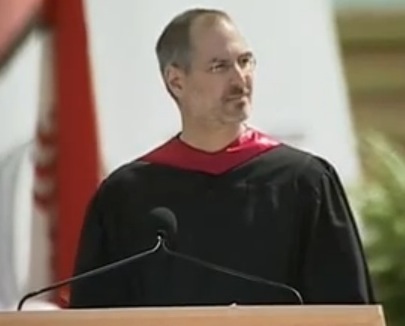
In the aftermath of Steve Jobs’ passing various snippets about his life became public or better known to the public. Whilst being beatified as a genius by some and demonised as a monster by others there were certain sentiments which emerged which struck a chord with me. Notably some themes from his speech to the assembled graduates of Stanford University in CA some years back (above). He said that he dropped out of university but then dropped back in …to what? A calligraphy and lettering class. Now that makes a lot of sense to me as I have always believed this to be a foundational skill that has been forgotten by recent generations. No wonder it inspired him. In his speech he also urged the students passionately to pursue their inner voice,  to pursue what they loved. To do things with love. That also struck a chord which I will come to later. Also he mentioned death which is also indicative of a kind of realism that came into his life after he was diagnosed with cancer. Interestingly Jobs’ birth name was Abdul Lateef Jandali having a Syrian father, Abdul Fatah Jandali, who was from a notable sharif family from Damascus.

When I was awaiting to go to London many years ago, aged 18 to Architectural School, I wrote in my best italic handwriting on crisp white laid paper, to an architect in Cambridge named Christophe Grillet asking for a holiday job. His ex wife lived in my town and birthplace, Saffron Walden, which is all but 15 miles south of Cambridge and suggested I try for a job. Even the hand addressed envelope was a work of art. I was very pleased to be accepted. He said it was my good handwriting that got me the job. I don’t think my current scrawl would do the same, though if put to the test I could still manage a mean italic script but only done very slowly. Good calligraphers write skilfully and quickly and it’s a marvellous skill which all should attempt.

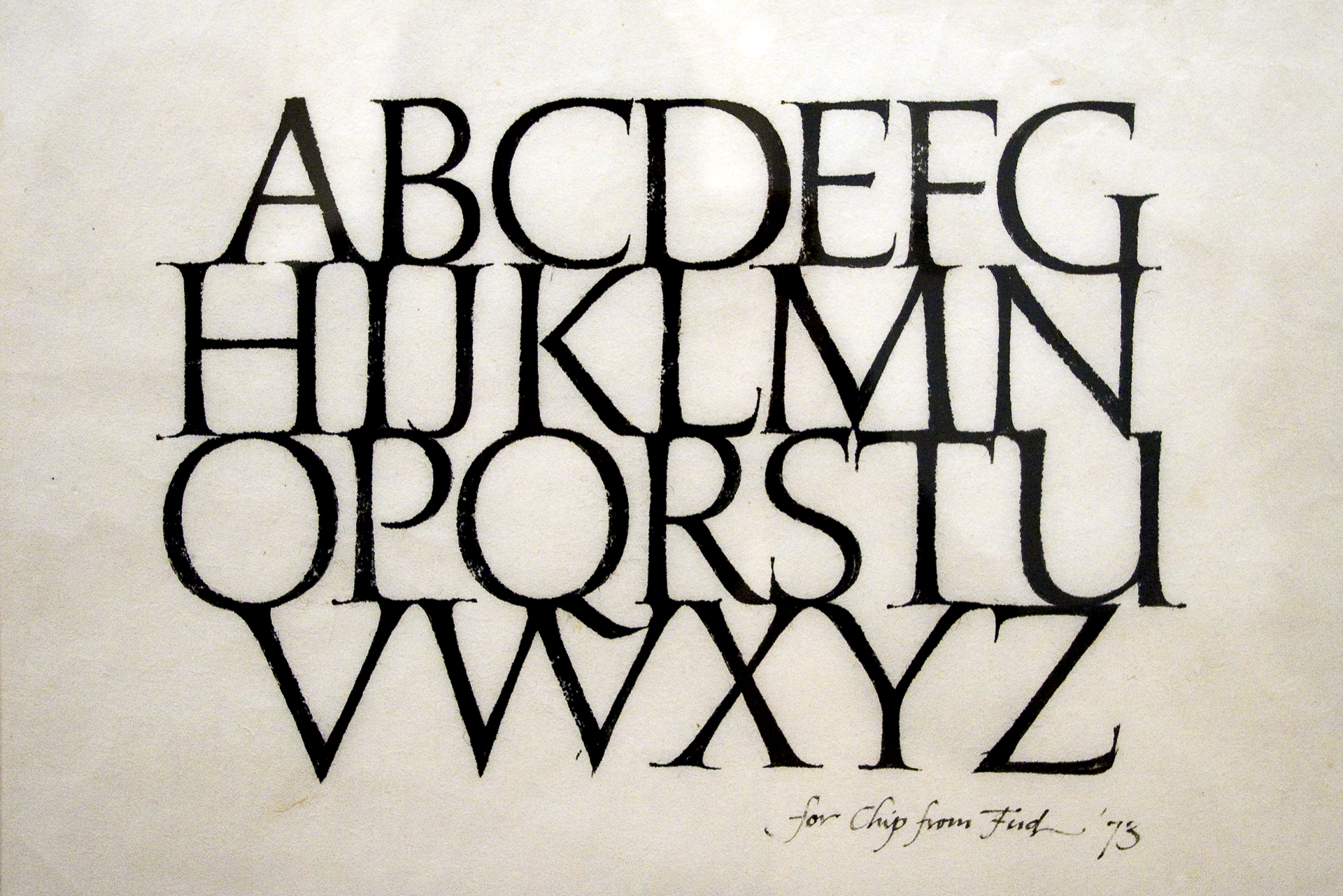
When I finally got to the Architectural Association School in London, which was the Mecca of Modernism in 1963 and still is, our very first project was unexpectedly on Roman lettering. Whether they still teach this I don’t know but the teachers (practising architects) were obviously fully aware that inbuilt into Roman lettering is a sense of scale, proportion, beauty, tradition, language, culture and so on and to master it is no mean feat but it grants the student an intuitive sense of design and is a good starting point for an architectural education.

I believe that Jobs’s introduction to typography began in those lettering classes and it infused all his life’s work. It granted him a meticulous and fanatic eye for detail and perfection inside and outside his computer products. I know people who work in Apple and some complain of the corporate climate but you have to admit the company understands marketing deeply and how to make people value their gadgets and to spend a lot of money on them. But as well as the slick marketing it’s the typography that is always so well considered – if a bit cold and clinical. But always exactly right.

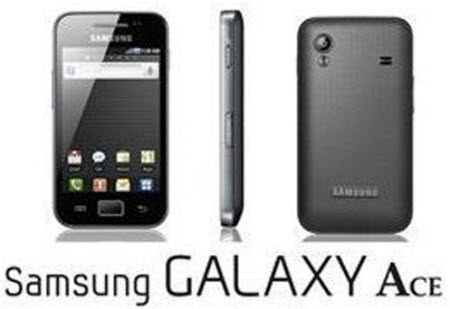
Compare this to some of the Asian giants like Samsung who have really aped the Apple orchard in so many ways. I recently got a new phone, a Samsung Galaxy Ace, as my Vodafone points got me it for virtually nothing. It’s an imitation iPhone without doubt, same size colour, weight. It’s not bad as imitations go but from the very beginning before it’s out of the box you know that its no Apple product. The print of the word ‘Ace’ is so unutterably bad typographically that you just wonder what surprises the phone within holds for you. The Android operating system is Google’s so it is pretty good and preferred by some but in no way as sveldt as Apple’s multimillion selling offering. Typography sits right at the heart of all design projects but the corporate moguls for whom these projects are just money spinning schemes are mostly unaware of the fact – unlike Steve Jobs. Forgive me if I seem, like Steve, a little obsessive about this subject but typographers usually are. You have to be obsessive as the details really matter. The black tea shirted Apple sinyasins who work in the Apple stores, and who appear in their marketing videos, rightly scare some people. There is a cultish quality to it, but this is what love and devotion does to people. In the Jobsian quest for perfection even he must have realised at some point that nothing he  could make could be totally perfect. We can only aim for perfection.

This brings me to his other comment about love of what you do. Periodically I have given short courses on calligraphy, to wit Andalusian arabic calligraphy, which for me (as with all good arabic calligraphy) is the core of much of my own work. Ibn Khaldun wrote that the Andalusians valued penmanship higher than many other disciplines. On these courses, strangely but predictably I would be always asked the question: what is Islamic Art? I get stumped by this question as in some ways it is quite inane.  What is Islamic anything? I don’t think it’s a question anyone asked themselves in history because they didn’t look at the world like that. Any religious person, Jew, Christian or Muslim or whatever, lives his or her life and does whatever they do to earn a crust and more than likely enjoys what they do whether it is making shoes, painting walls, planting carrots, designing buildings, teaching children, you name it, but not with this self conscious idea that what they were doing was Christian or Hindu or Muslim. Most creative people borrow ideas from all over the place. The difference is not the label but whether it is done with love, as this is what comes out in the wash, so to speak. The artifact, the child, the calligraphy, the song, the speech, the book, the curry, the home grown potatoes …. all resonate with what was put into them. If it was love it will be clear, as the human heart responds intuitively to it.

Dr. Mesaru Emotu, the Japanese scientist, demonstrated conclusively that our energies affect water crystals instaneously. So then how about everything else? Doesn’t love, one of the strongest of human emotions, affect everything? Doesn’t love make the world go round?  Charles Dickens wrote that in the 1800s and nothing has changed and the world is still going round.

(PS Apparently the adjective Islam-ic wasn’t used in arabic in the premodern world. Some kind of fragmentation has taken place in which we stand outside everything looking at an idea rather than being it, worried about all these issues. We’ve become tourists looking on, overly concerned with identities and labels. It’s as if the language has become debased along with everything else. I’d be interested in any further light that could be thrown in this as I am no arabist.)

Posted in miscellaneous, typography / design | 2 Comments

The curse of the PA

The theme of this post is one that has really bothered me for some time and just how to get into has meant delaying its publication for some weeks. On the surface it appears a rather trivial subject but the more I examine it the more I think it of importance and long neglected as a topic. As I have said before, I am interested in room elephants and this is a big hairy one. A real mastodon.

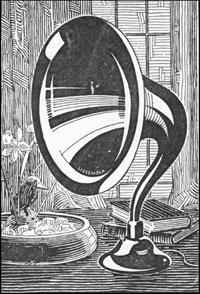
For those unaware of what a PA is, it is not in this case a Personal Assistant but a Public Address system. You all appreciate them when they work well and enable a voice or a musician to be heard clearly but you also know immediately when they go wrong or are misused.

When you last winced at the screeching microphone feedback at the last public meeting or event you went to, did you bother to think how many times you had experienced such a thing. On the other hand how many times have you heard the cry from the back “speak up we can’t hear you!” I thought a little research was necessary after a recent visit to Morocco where it seems in the last ten years everyone has gone PA crazy and which has really prompted this investigation. The very first use of a public address system (PA) was as long ago as 1915 in San Francisco USA. Here’s what happened and why.

It was October 1915 and it appears that the new Civic Auditorium in San Francisco was about to be dedicated and “Magnavox” equipment was installed to reinforce the voice of the Speakers. Governor Hiram Johnson was supposed to be present, but was unable to attend in person due to a severe cold. It was therefore arranged to run a special line between the Governor’s home in Green Street San Francisco and the Auditorium, in order to transmit the message. Hiram Johnson, in front of a microphone, sitting in front of his fireplace at home delivered his speech which was heard in the Auditorium some miles away. This may have appeared as a great step forward for mankind but 86 years later I just wonder if it really was. Read on.

I was in Fes, Morocco in June last year (2010) seated directly in front of eight of the Fes singers, some of Morocco’s greatest exponents of Andalusi singing, under the direction of Muhammad Bennis, who were doing what they do a lot of, and that is the celebration held 40 days after a funeral. It was staged in a large courtyard with an audience who, for part of the event, were eating cous cous. These are quite common events in Morocco and singing for these is how many of  the professional singers in Morocco make a living. The Fes singers are truly some of the best singers you will ever hear sing in this style but I do have a gripe.  A big gripe. Despite two hours of the most sublime singing from a selection of the Burda, the Hamziyya and the Fiashiyya and much else from their enormous repertoire, they had made the mistake in my opinion of employing a really powerful PA system. It was just like an old rock concert in fact in its painful amplified acoustics. I have tried to understand why, and even sympathise with their plight, but I’m afraid my conclusion is that it was a monumental mistake to have introduced PA systems into this most intimate of vocal performances.

OK, they need to be heard and sure enough this is one way of doing it except that Moroccans more than anybody do not need amplification, as they almost universally have natural megaphone voices. But in this case each singer had his own microphone and use them they did with an almost Tom Jones type of microphone technique. But the effect of amplifying the voice in this way seriously distorts the voice and robs it of its unique acoustic quality which is what best affects the listener – voice to heart with no intermediary. It was also ear-splittingly loud for those unfortunate enough to be near the loudspeakers and tainted as well by a really crude electronic reverb. What’s more, the polyphony of the performance, i.e. the ability of the listener to locate the origin of each voice, is lost entirely. With all this it is hard to try and see the benefits of amplification, but some there must be. But in this case its intimate visceral beauty was utterly lost.

For centuries this kind of singing worked absolutely fine in the riyad courtyards, the mosques and zawiyyas of old Morocco with no amplification at all. So why has the PA become necessary? Weren’t the beautiful reverberating spaces of these old buildings enough? Clearly it is in part because it is just there, and the temptation to amplify is too difficult to resist. Also there is definitely an element of fashion about it but no consideration of the aesthetics of it at all.

PA systems have been around the developed world for some time but relatively recently in the third world. And I know few people who really like them although the majority just accept it rather in the same way that people accepted strip lighting in homes, offices and mosques even though it was harsh and ugly in every way. But it was the fashion and just part of the modernist package that had hitherto only invaded European cultures. Audio reinforcement had actually become quite a sophisticated science over the last 50 years with big auditoriums like the Festival Hall in London utilising very high quality and almost imperceptible audio amplification. Nothing like the crude PA systems of rock concerts amplifying already electric music to deafening levels from which it seems the Moroccans have taken their cue.

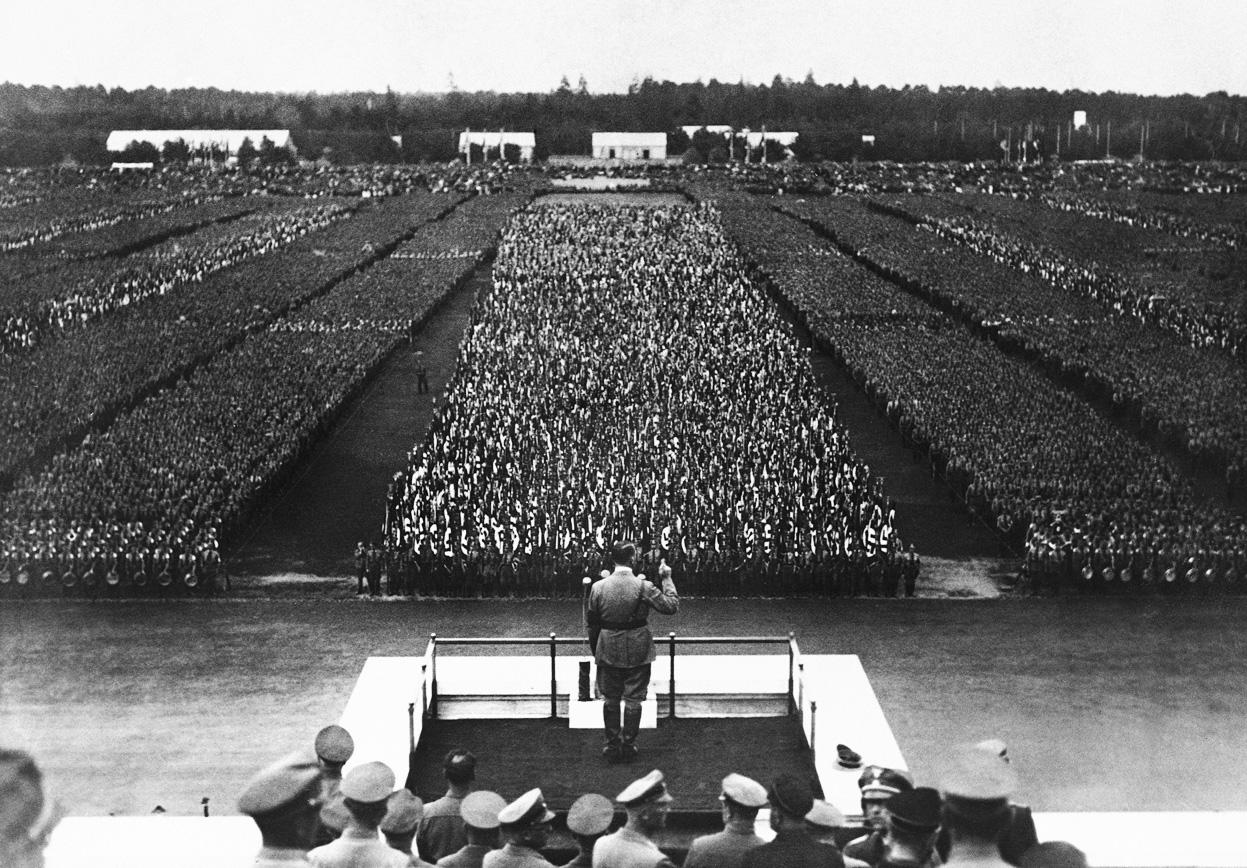
Of course it was not only musicians who saw the benefits of the PA system and how you could reach ever larger and larger audiences with the vastly increased box office receipts. Politicians and religious speakers realised they could preach their message to larger and larger audiences. The Third Reich also realised this was useful way of imposing itself in a big way on a lot of people before television could do the same with less bother. Mr Hitler used the microphone to win over friends and influence people in a big way as we all know and the Nuremberg Rallies (pictured above) were the clearest demonstration of this. The PA at the political rally was a symbol of power as it inflated the presence of the speaker till he was like some thunderous Divinity addressing the human race. But in a way it was cheating. Stories of old indicate that orators could miraculously reach hundreds or even thousands of people with no artificial assistance. The oratory style of religious speakers from the subcontinent of this time (as well as their frock coats) were modelled on the pre-PA oratory techniques of British Victorian politicians. But put that in front of a microphone and you have a frightening and deafening result. For the prophet Jesus, addressing the 5,000 was for sure an acoustic affair but now the audiences at religious conferences are assaulted with several thousand watts of amplified power. I’m not sure this is a good thing. The Nuremberg precedence is not a good one and even if the intention is a good one there is an inherent danger in the form of this kind of meeting with the speaker on a podium addressing the people with his voice greatly amplified. Add to that the giant video screens and you have a pretty deadly mix. Traditionally in the Islamic world , for very good reason, meetings would be on the same level with men seated in a circle or clustered around a teacher or a speaker. Sometimes the speaker, like an Imam or a teacher, would be slightly raised on a chair. But the artificially amplified voice, is like a kind of artificial podium high above the audience where there is no equality, rather like the theatrical stage, from which all manner of drama could be enacted and something open to abuse.

But for the political rally, audio quality was not as important as it was to music. As long as you could depict the words that was enough. Orchestral and choral concerts need no amplification as they are loud enough already. Even soloists both vocal or instrumental, never really need amplification – although nowadays subtle reinforcement is more than likely in a large venue. But this is a long way from the crude use of amplification that has invaded traditional cultures like Morocco. I sincerely believe this technology is corroding these old cultures whether it be in the mosque, at a musical celebration like a wedding or at a funeral celebration. But I might just be a lone un-amplified voice in the crowd!

The effect of  unadulterated acoustic voices on the human organism is central to its efficacy in expanding the heart and healing the body. Amplification interferes with this subtle process mostly for ill. Despite having ears on either side of the head the human organism can comprehend sound from a 360º surrounding sphere, above, below, right, left, front and back. The highly amplified blast denies this and effectively dumbs down the experience to just a one dimensional homogenised vibration. When stereophonic recorded sound was made possible it took advantage of that fact that we are naturally able to place the source of a sound if given enough information to reconstruct the stereo picture in our heads. But we are capable of much more. Many attempts have been made to create wrap round reproduced sound but has only really utilised in cinemas and home Dolby systems. In theory this could be a life enhancing experience but it would have to be so subtly executed.

When I was studying architecture in London in the late 1960s my fifth year thesis experimented with some of these ideas. I envisaged a kind of geodesic dome covered with an acoustic skin of canvas. Inside the dome were suspended many very high fidelity sound monitors through which sound could be projected and gently manipulated in many ways. It took advantage of what I described above, of our ability to perceive sound coming from a multitude of directions. The resulting environment could be used for theatre, musical performance, singing, exhibitions…almost anything comes to mind. With the kind of control of amplified sound that we now have the result could be truly stunning with subtle atmospheric directional reverberation, delays, movement and so on. It was called an Electronic Sound Space Synthesiser. Sadly this never came about even though at the time, pre-computers, it was all technically feasible though very expensive. My point is that the idea of Public Address could be used creatively and beautifully – but that in truth it all sadly gets reduced to a low common denominator – the over the top rock concert amplified over-kill. Maybe this is inevitable with all technology. It is of its very nature to sink to its grossest manifestation.

Is this the inevitable price we have to pay for modernism? To see all traditional forms dumbed right down till they are just one dimensional entertainment. Or is it not too late to try and bring some awareness of how this technology could be used to enhance rather than destroy. Or is abandoning the PA the only solution. For Muhammad Bennis and his singers I think it would prove a tough challenge to change.

In a future post I want to gather what I can about music therapy and the maqamats as it is intimately related to what has just been discussed. Sound can heal the human organism and it can kill it. A weapon of peace or a weapon war! And its time us, the long suffering public, fought back. I want to free Morocco from the curse of the PA. (and Spain come to that). Anyone with me? I feel the odds are against me!

You can read all about the history of PAs here:  http://www.historyofpa.co.uk/

Posted in miscellaneous, music | Tagged , , , , , , | Leave a comment

Death and Taxes

It’s the old chestnut. Death and taxes: the two inevitable facts of life except taxes are avoidable if you know how, whereas death is not.

The other day a female stand up comedienne named Lucy Montgomery stated on BBC Extra that she wanted played at her funeral Welcome to Hell, a record by a UK heavy metal rock band called Venom. (ouch) She could have been just joking in a kind of Goth fashion but I must admit I didn’t see the joke. It’s one of those things that casually slip out of folks without much forethought. It’s curious that people who deny any kind of divinity or afterlife experience will often admit that Hell exists even if they believe Heaven doesn’t. I suppose the logic is that at least you know that the worst that can possibly be expected is Hell so you can do what you like with no surprises later, whereas Heaven has to be earned. For most people, seeing the manifestations of a heavenly world on earth as expressed in architecture, art or music implies a belief in its existence afterwards and even the most die-hard (excuse the pun) atheist can be moved by such things. Maybe it takes imagination to advance your life to that moment when you leave this world. But imagination is in short supply these days as all the image-making is being created for you by the image-creators of Hollywood or wherever. So the images of Heaven or Hell are being played out there in the mediated reality, not inside us.

How many accountants or actuaries have every detail of their lives worked out to the last penny except for that moment when the axe falls and the angel of death comes a-calling.  Didn’t they factor this in to their Excel spreadsheet? All the taxes dodged and avoided, all unpredictable events insured and still the one certain thing that we know will happen has been completely ignored. Truly amazing.

This post is short. Like life.

Posted in typography / design | Leave a comment

The silken curtain call

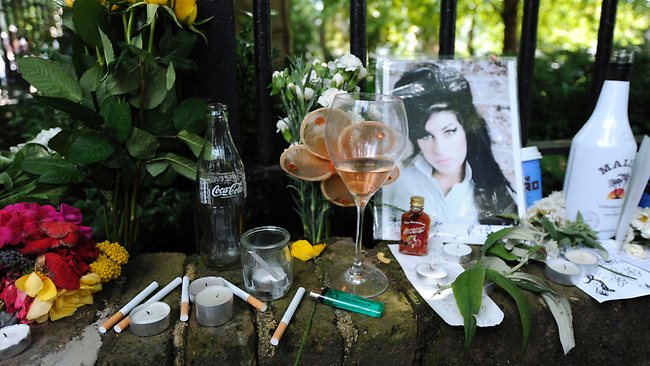
When the singer Amy Winehouse died recently it brought out the usual hypocrisy from the world’s media but largely hid the real tragedy that underpins such happenings. I didn’t know Amy’s music at all – wrong generation – but her demise was a familiar pattern to the various musicians and actors I knew or had worked with in the past, who died victims of their chosen lifestyles. Some of them had a stay of execution till later in their lives like the talented singer songwriter John Martyn, but others like Rick Gretch, Marc Bolan and Sandy Denny (all of whom I worked with) all died young for different reasons.

All of these artists were talented musicians but couldn’t ultimately deal with where their talent had taken them to, often aided and abetted by adoring fans and record companies. As Eric Clapton was reputed to have said: music is the drug, It is what kept them looking for an ultimate experience and an ultimate music at any price – something I can understand. Many musicians and actors explain why they keep going with their pretty tortuous lifestyles. They all say it is the star status and the applause after the final climactic number or the ecstatic curtain call. This momentary experience has been likened by some performers to a silken drug.

I just don’t go with the idea that without their lifestyle we would somehow be deprived of some great art. A lot of people have made a lot of money from other peoples’ pain, and music and film are two of the global businesses where it happens frequently. I’d rather these artists had lived fulfilled happy lives, hidden from the world, rather than publicly burning up like shooting stars in the upper atmosphere. All for what?

Almost universally, fame, and more so, the craven need for it, is considered by all spiritual teachings to be the last great barrier to a soul’s essential development and final return to God. It is a triumph of the lower self (nafs al-amara). The celebrity obsessed world we now live in reflects how, like some kind of virus, the desire for fame has gripped the masses. However some fame, one can rightly say, is God given, and something bestowed rather than claimed or engineered by the dark arts of PR. But its danger lurks in the breasts of all men and women and we have to constantly check our intentions.

Posted in music | 3 Comments