The Quirkylympics 2012

Readers may be aware I have an ongoing fascination with lettering, fonts, branding, logos etc., and so I followed the recent Olympics with some curiosity as, like many others I suspect,
I was acutely aware of its strange logo and typeface and wondered what it all meant. So I commenced to do a bit of research into the history of the Olympic Games and what has shaped its current form and its ruthless corporate Mac-Cola culture. We are now at a safe distance I hope, to make some cool headed observations.
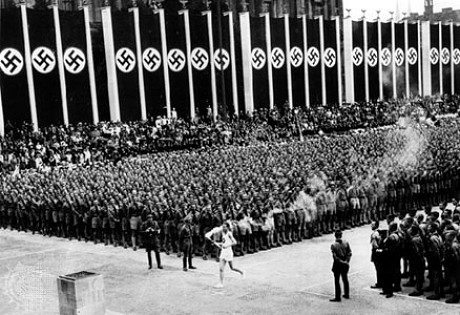
Reference has been made by several commentators to the 1936 Berlin Games likening aspects to the 2012 version and I have wondered if there was anything in this. If you look far enough you find of course various conspiracy theories linking it to the Illuminati and so on but many aspects of the current Olympics, like its insistence on complete racial and sexual equality and comprehensive national representation would have been detested by the Nazis. What was prototyped in the 1936 games was more to do with the big event which Hitler was already using in his Nuremberg type political rallies in which loud PA systems and huge swastikas dominated the ecstatic militarised crowds and its brainwashing effect on the masses in a time before television and to somehow make Hitlerian politics acceptable.

The Berlin Games were crucially used by the Nazis to embolden themselves on the world stage coming out of a time of terrible depression, isolation and political turbulence. They entered the most athletes in the competition and won the most medals. But Hitler had to also endure the black Jesse Owens winning the 100m. Already concentration camps like Dachau were up and running and gypsies, Jews, homosexuals and non-Aryans were being rounded up and ‘separated’ from the main population.

The  Weimar Republic’s worship of the human form (not the first in history by a long shot) happened to coincide with the rise of fascism but wasn’t, it appears, linked initially. But it did blend quite conveniently with Hitler’s desire to create the perfect Aryan human, the defining philosophy of Nazism and the cult of the superman, based primarily on the Darwinian idea of survival of the strong over the weak. No compassion there.

As I see it, any sporting event (like the Olympics) is only ever about the winner. The consequence is of course the egregious triumphalism that we witnessed over the few weeks of the Olympics along with spandex clad athletes punching air and emoting very visibly, but with few being able to string two words together when spoken to. Fastest in the world maybe but not the sharpest knives in the draw – with a few exceptions. Dumbed down but gifted, muscular athletes in other words but at least not discriminated against because of  God-given attributes like race or religion or disability. However you only got interviewed if you spoke English. Not much effort made by the BBC to talk to Chinese gymnast gold medallists or Algerian gold medallist sprinters.

But of course at times the Olympic Events are naturally very exciting. You can only admire the dedication of these athletes in their endless years of painful training for the passing glory of the podium. Some events are quite spectacular and exciting I freely admit, but the massive packaging of the event with its underlying commercialism undermines any long lasting value it might have in my view. Is it really going to reduce obesity in the west to have the masses watching it on TV on their sofas? The excuse is that it will get people into sport and exercise….some people. But a games heavily sponsored by Macdonalds (fat) and CocaCola (sugar), the two main pillars of the Obese Society is really a sick joke which exposes the kind of fathomless hypocrisy that modern Olympics has embraced.

There was much that was tested out in the Weimar Republic leading up to the Second World war in 1939. It was a great social, economic and technological laboratory in which much that we take for granted as a norm in the post war world was thought up and put into practice. It was the most advanced scientific and technological society of the time. Film buffs may remember the scene in The Life of Brian when John Cleese says “what did the Romans do for us?” The apologists for Hitler remind us he built motorways and built cars, like the VW, for everyone amongst much else. But Mercedes and VW and the autobahns were inevitably part of the war machine. The whole model of a modern materialistic and socialistic society was being tested out in a grand fashion like a great experiment. This was the third Reich which was to last a thousand years.
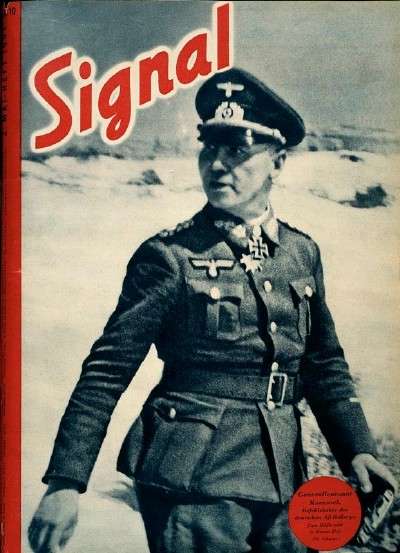
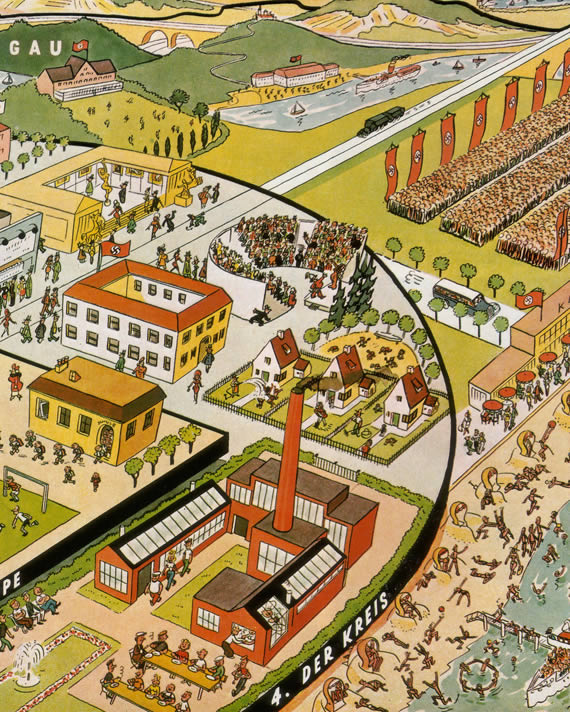
If you can ever find a copy of the English language magazine Signal, a German propaganda magazine, which may have come into Britain via the Irish Republic during WW2 anytime between 1940 and 1945,  you will be astonished by its similarity to Life magazine of post war America. In full colour filled with ads for Agfa cameras, Mercedes Benz cars intermingled with friendly fireside chats with the Führer explaining why gypsies would be happier somewhere outside Germany. The rare edition I saw had as a centre spread an artist’s impression of the new ideal German city (part of this is in the attached illustration). It could be Milton Keynes with motorways and business parks etc., except for the fact that in the sports stadium on the right, a great Nazi rally was taking place with men marching around with their arms raised in the roman salute with great Swastikas emblazoned everywhere and enormous German eagles on posts overseeing the crowds.
Back to the funny Olympic graphics and the £800,000 logo by Wolf Olins, a big design company in London. Generally disliked but foisted on the public who in the end had to put up with it like some unwelcome wart.
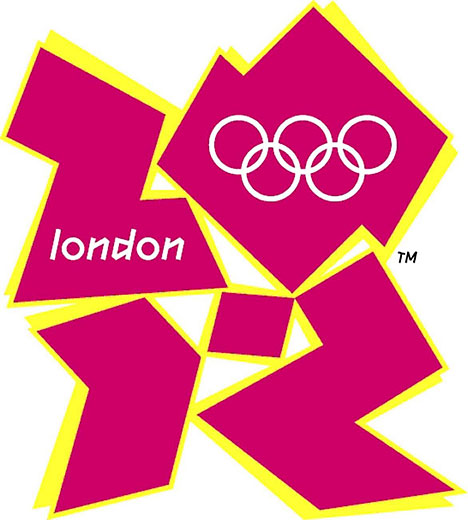
Hidden in the logo was the word London in a font called Headline which has regularly featured in a list of the World’s Worst Fonts. When I first saw it I thought it looked like a reject student concept from a second rate art school. But of course the Olympics does not stand for tradition, permanence or artistic achievement but purely for the quest for the winner, the superman/woman and for that you need an ever shifting stage, a new city, new enthusiasm, new money, new records to be broken, new technology and most importantly a new audience to hypnotise with ever more high definition TV. If the graphic concept is slapdash or ugly it matters not, as it adds to the impermanence of it all like a chocolate wrapper. My personal opinions aside though, I have to admit the TV coverage of Olympics and Paralympics was incredibly slick (close-ups of expectant fingers!) and such a huge event so impeccably organised, but why was there so little dissent by the public, who must have got a bit sick of such a surfeit of limbs, Union Jacks and sweating bodies.

Ian Sinclair, the writer who knows the Lea Valley (the site of the Olympic Park) better than anyone, described the Olympic Park in East London as a giant hallucination, I also know the Lea Valley well, having passed through it on the train into Liverpool Street since I was a boy. Beautiful nature reserves were obliterated to make way for the most ugly Macdonalds imaginable surrounded by a concrete wasteland. Soon to be left empty as the big circus moves on to the next Olympic City. The imprint of the great corporate steamroller as it groans around the world titivating the public with its silly pink graphics, firework displays entertained in London that is, by the poster boy of an illiterate grunting world monoculture: Mr Bean.

No one was allowed to express any criticism of the Olympics whilst they were in motion, and the few that did, like the Mancunian singer, Morrisey were soon silenced and smothered. But how many, I wondered, held secret thoughts like I did, that this was just a celebration of corporatism, nationalism and let’s be candid, rank idolatory on a massive scale which brooked no criticism from anyone. “Put down the Pepsi and no-one will get hurt” was the inspired Private Eye cover of two heavily armed policemen outside the main stadium. Furthermore the idea I mentioned earlier of the Superhuman ideal was further rammed home in the Paralympics, whose contestants must have felt utterly patronised knowing that they could never attain the perfect physical Olympian Grecian ideal. Obviously there were inevitably good things that happened and in no way can I denigrate anyone who overcomes disability or disadvantage to succeed in whatever. But I’m looking at a bigger picture and trying to make sense of it.

The link below is to an interesting development of some of these notions, which the above was not based on but which I just found assembling this post and thought worth pointing you towards.

http://wingsland.podgamer.com/weekend-the-olympic-rallies/ by Scott Minto
Posted in typography / design | 2 Comments

More from Sarajevo 1997

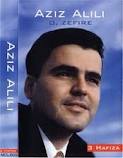
Bosnian Hafiz Alili recites here (mp3s below) some opening ayats of Sura Rahman which opened the Yusuf Islam concert put on in Sarajevo in 1997 to help promote Bosnian culture in war-wracked Bosnia two years after the war finished. Maybe it was because I was there, but this recital never fails to open that magical door into the Bosnian universe when I hear it. His style is uniquely Bosnian as far as I know and is permeated with the sheer himma (the only word I could come up with in this case) that the Bosnians have in bucket loads. This is a continuation of the post I put up last year entitled Goosepimples in Sarajevo, which gave some background to the visit we made at that time, and I promised I would upload more material. I have recently been digging up other tracks from the concert, some of which is on this post. I also added here an excerpt of Hafiz Alili singing Shaheed which was, in its more pop format, a hit song during the war. I have also added another song I sang in the concert (rather nervously) called Bird in God’s Garden which originally appeared on the Habibiyya LP in 1971.(now available even on Itunes but also on CD from Sunbeam Records in London.)

On future posts I will put up some of the choral and orchestral tracks from the concert which are very moving. Traditional Bosnian music does need some getting used to but has certain unique qualities which I will try and discuss. Some of this material made its way on to Youtube but I find it quite difficult to watch.

Part of Sura Rahman – Hafiz Alili

Hafiz Alili – Shaheed excerpt

Bird in God’s Garden – Sarajevo

Posted in language, miscellaneous, music, religion, tassawuf, Uncategorized | Tagged , , , , | 2 Comments

The Vanishing Sign Writer

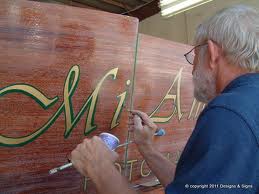
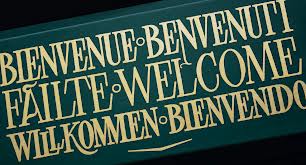
Much as I have championed skilful type design I am also saddened that the type font has virtually wiped out the sign writer’s craft. Hand lettering on shops, vans and on sign posts and name plates has all but disappeared in the west and only in a few places does it persist. I’m not talking just about the professional sign writer who may still get the odd art job here and there and who will be identified by the ball and stick he wields to guide his hand as he deftly applies paint and gold leaf while up a ladder in a busy street – but also I mean the homemade variety of lettering you would see on a butchers’ shop window done in a traditional style with some easily removable white paint – “chump chops today £2 only”. In the ever encroaching standardised branded shop sign conceived in some ad agency, the hand-executed sign nonetheless sticks out a mile. Because it is unique and individual and sticks in your mind.

I always recall from the 1960s, seeing on a butchers shop window in Camden Town, London on the 24 bus route as I passed by everyday, hand-blazoned on the glass with white paint: The Eat Meat for Heat Meat Boutique. The wording would change weekly as the owner poetically came up with another pithy phrase. It was his little blog for the passing population to wonder at. At top down corporate level this could never happen – of course.

Sign writers do still exist but often do commercial vinyl cut or silk screen typeset signs as well, though the purists would never venture into such technology. When you see handsome freshly made gold- leafed lettering the eye is drawn to it as it reflects light in unusual ways especially on black or dark green. And you momentarily look into the artistic soul of the artist. It is an art form which I admire which makes the plasticized variety look very bland. Not that there is no art in the ad agency brand. It just lacks soul.

I’ve done a few shop signs in my time, The Poor Mans Trading Company in Bristol Gardens, Maida Vale, London back in the 1970s….(no pictures, sorry). And The Strangers Wool Shop in Norwich in the late 1970s and a whole raft of section signs for the actor Michael Gough’s antiquarian bookshop in Holt, Norfolk in that period when one did whatever job came through the door. I had to just invent the rules as I went along but a knowledge of roman lettering really helped. The work I did wasn’t that good, as I was aiming high and fell short, but nonetheless it possessed a uniqueness that regular type would not possess no matter how well machine executed.

If you wander around the Cambridge Colleges you will see beautifully small hand lettered name plates in white on black, black on white or even gold on black–on the doors of some professors and also on the sign boards of the more exclusive shops. Down here in Spain you will still see artful hand painted letters on many a white wall advertising a car workshop or a restaurant.  In Granada, Spain (my local city) you can still see pre-technological original sign art from 50-100 years ago. On the many family owned businesses (no Starbucks yet) you will see echoes of the old, probably Franco period, of commercial signs. But the mark of the corporation jackboot I’m afraid increases yearly with Zara, H&M, and Apple who have arrived in the last few years in this beautiful old city…oh and Dunkin Donuts which has looked very out of place and unpatronised since it opened. The Spanish prefer churros, did no-one tell them …!

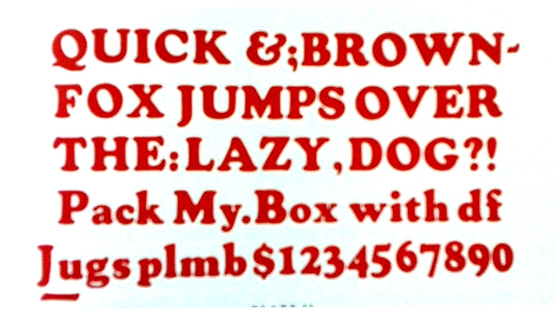
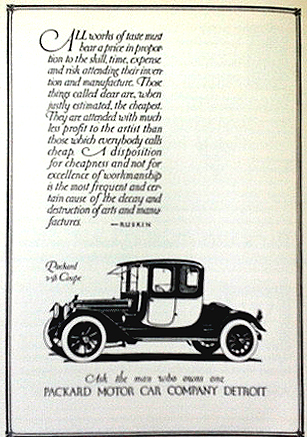
I have a remarkable book about the designer and American artist Oswald Cooper who hailed from Chicago at the beginning of the last century. His way of producing a newspaper ad or some promotional literature was to letter it by hand and where needed draw the product as well (see illustrations below). He was so good that the metal type houses bought his letter designs, one which became a famous typeface to this day: Cooper Bold, which you all know. Easyjet; the credits of Dads Army and so on.

Oswald Cooper

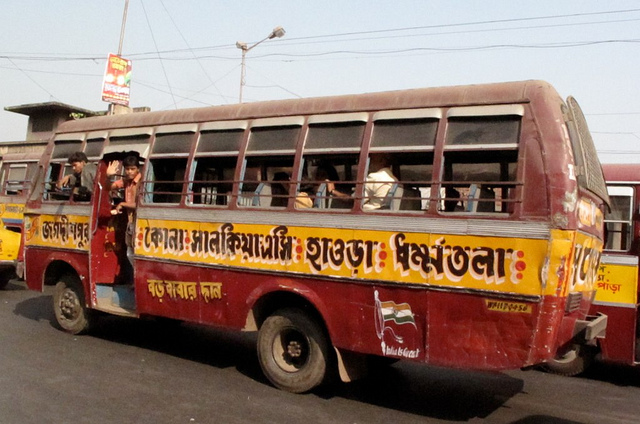
Cooper Bold is a strangely timeless typeface, easily recognisable at any size and slightly comic and chubby but very readable. Part of the great lexicon of western typestyles. He was a commercial artist which was common-speak in those days for a non-artist, an attitude which was prevalent until the 1960s when they (we) became graphic designers. It was a reminder that everything we see printed or projected on our screens was once hand created. The best art for me is something that is unique, un-copied, un-reproduced, a record of the unique moment in time it was created and painted. This is the humanity you see in the hand painted signs that, in the developed corporate world, are getting rare. Go to India or many parts of the third world you will still see that colourful blast of life.

Posted in language, Publishing, typography / design, Uncategorized | Tagged , , , | 5 Comments

Flight from the Actual

I am one of the many who embraced each new technology as it presented itself over the last 50 years. It included multi-track analogue audio recording and phototypesetting in the 1960s, digital audio recording, digital cameras and mobile phones in the 1980s and finally computers in their total conquest of everything in the 1990s and beyond. I know people, often skilled craftsmen who rejected such innovations to defend their crafts but whose knowledge we have all personally benefitted from nonetheless borrowing from their experience to inspire our own work. But of late I have had time to reflect on where it is going, where it has come from and whether it is all such a good thing.

Whether you examine photography, audio recording or printing in all their many manifestations, there is one fundamental process which is taking place. It’s all to do with reproducing an original in some form…a photograph, a printed book, an audio recording or a film. The original in each case has been borrowed and recreated and in recent years more than likely edited and manipulated on a computer. Students of muslim law often get exercised about photography and whether or not it is legitimate to ‘take’ the image of a person. Our ancestors resisted photography and only capitulated by allowing only very serious portraits in their best clothes, rarely smiling. We know the argument often presented that it is creating an image which the photographer cannot bring to life…the Qur’anic challenge…but defended by photographers as being only a frozen reflection of God’s creation. But like it or not, photography, film and printing almost immediately engendered pornography, alienating people yet further from the actual. No wonder the modern porn-saturated masses have such dysfunctional sex lives.

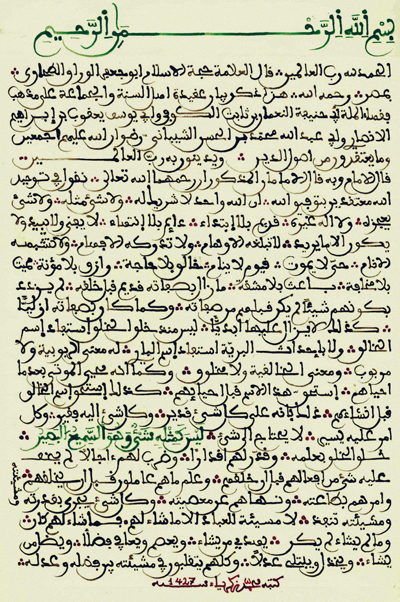
Although photography of a living person is contentious I would add that copying original calligraphy is equally contentious as the copy appears dead by comparison. The living moment when that calligraphy was written has been removed, aped. Not long ago in Morocco, if you wanted a copy of a book or poem you would have to buy a handwritten manuscript or copy it yourself by hand. (or memorise it) The page of the Burda illustrated here (below) I have often shown to illustrate a hand written copy I can only imagine was made to order by a scribe or carefully copied by someone who wanted it badly enough. Maybe a 150 years ago.

Similarly an audio recording is, in its simplest form, a recording of an original performance or sound for replay later. This was accepted as a wonder unquestioned by those who first heard such things. Why was the recording considered so wonderful over and above the original? My own mother was awed as a child around 1912, a hundred years ago, by the crackling sound of the Moonlight sonata by Beethoven emerging from one of those enormous horns which were attached to the early wax cylinder phonographs. She was quite capable of playing it well on a piano which was to be found in most Victorian or Edwardian homes. But then I was infatuated in the 1960s with stereo, quadrophonic, polyphonic audio and so on until at a certain point in the early 1970s I asked myself why I was trying to recreate something which you can appreciate just sitting in the middle of a field with all your senses wide awake. In the moment – not looking backwards or forwards.

Why are we fascinated and dazzled by something removed from its origin, even more so when it is reproduced many miles away by radio or television. The internet has of course compounded this phenomena in a huge way. I heard speak of an English jazz pianist who was an early Muslim convert, named Ismael Hobson, who played with all the great names in New York in the 1950s but who refused at all times to be recorded believing that it was sacrilege to try and reproduce such live spontaneous music. This is anecdotal but from a trustworthy source and I would be interested in any more information regarding his life. I like the idea.

Mea culpa. As I confessed at the outset I’m guilty of embracing all this reproductive technology and I know all its ins and outs having worked over a lifetime in music, film, photography and printing. But more and more I would like to return to a more live condition where everything can be appreciated in the present tense, not obsessing about recording it or photographing it (or selling it). Nothing can be enforced, quite clearly, but I can envisage a future time when people have more manners and don’t photograph you in that unsolicited fashion when you have a mouthful of couscous or worse when you might be laughing or sleeping. It is a real intrusion and I know I am not alone in thinking this.

So I’m calling for a return to the actual as opposed to the uninhibited flight from the actual which is what has happened exponentially since WW2 . Photograph that view in your heart; remember that face without the need for the dreaded Facebook which has opened the flood gates to a kind of narcisistic virtual society in which no one appears to value privacy or even modesty. Go see the Shakespeare play, not the DVD; learn to play the Moonlight sonata from the sheet music. That is true re-creation. The only way you might stop your own children/grandchildren becoming total couch potato wedges. Better to write that peice of calligraphy badly yourself than to swoon at the master’s work and do nothing yourself.

I used to love writing letters in my best italic hand but now I dash of emails quicker than I can think. I got my first job by virtue of my hand writing with an architect in Cambridge in 1963, who liked my italic script. Now it counts for little and my handwriting has descended into a horrible scrawl. I doubt if I will see in my life time a return to the actual but you never know. Live music is returning as the only way a professional musician can earn a living as recorded music produces so little profit because of pirating. Which begs the question, should the mass production of books, music, films etcetera, be allowed to make huge wealth for people? Especially when popularity can be hyped so easily. Is the volume of sales the only arbiter of virtue left now? I don’t have the answers but the market may decide in the end. Giving it all away may be the only way. Maybe authors should earn their living reading their books live to an audience. That would shak’em up.

Lastly I don’t want to appear like the Luddites, those lace makers from Nottingham who saw that lace making machines were a threat to their living (they were right) so began smashing them up. In the giant plugged in universe we live in I believe it’s unrealistic to un-plug (even if one was to go off-grid) and in truth the internet has many, many uses. It’s just a phenomenon and a weapon of this time and we just have to learn to use it and other techno properly. And have some manners when we take pictures or stick a microphone in someones face.•

Posted in miscellaneous, music, Publishing, religion, typography / design | 1 Comment

A Complete Dip in the Ocean (and how to get it)


“Some of the great spiritual music of the world, rarely heard but strangely familiar – its thousand year-old tradition must have influenced a Northern Europe coming out of the dark ages -played and sung here by today’s greatest exponents,this is sublime
music for the heart, body and soul ”
RICHARD THOMPSON

“Pure baraka, as if the depths of the ocean itself
had burst into song”   
DANIEL ABDALHAYY MOORE

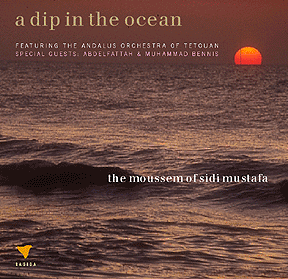
My very first post ever on this blog, almost a year ago, was about A Dip in the Ocean, a recording I put out ten years ago, just after 9/11, of Moroccan Andalusi music and singing recorded in Larache, on the Moroccan coast just south of Tangiers. I’m now making it available for anyone who sends me, by Paypal, the sum of £10 sterling or its equivalent to the following email address:

cwdm.qasida@gmail.com

This is pretty modest considering it is the equivalent of 3 CDs and includes an hour of new audio from the same performance recorded at the same time. The mp3s are maximum bit rate (320) and it’s indistinguishable from the original AIFF files. Once paid I will send two files by Sendspace.com (it’s pretty simple to deal with). You will then a get a link sent to your email address. I was looking forward to making a 3CD set for sale but it’s just too expensive to manufacture and I thought this might be preferable as it’s immediate and quality wise the same and much cheaper. Also I don’t like automatic and impersonal download sales like Itunes and am interested to know who is buying and listening to it. The new hour of music actually precedes the released album so you can set it up in your Itunes in that sequence and then listen to the whole lot at one go. The new material is pretty stunning and is really the warm up before the main course played later in the evening.

I have tracked the original album as the lack of tracking was criticised in the original. I didn’t manage to track the bonus audio. Frankly its the kind of thing you want to play from beginning to end anyway, as that is how we experienced it live.

As soon as I can I will try and add the liner notes from the original CD set as it might explain the event to those who didn’t see the original.

Here is a short sample (over 7 minutes) of part of the Bonus tracks. It’s the overture before the main set which started later after the Fes Singers Muhammad Bennis and his brother Abdal Fatah arrived.

sample bonus dip in the ocean

Posted in miscellaneous, music, religion, tassawuf | 7 Comments

Purification of the Heart Revisited

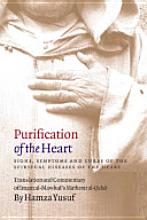
The second edition of Hamza Yusuf’s Purification of the Heart is shortly to be printed, eight years after it’s first impression.

It has been completely re-typeset in a typeface named Quadraat which was selected as Sandala’s house style ten years ago, when Sandala brought out the Burda of Imam Busiri 3CD set and book. The first edition of Purification was published by Starlatch and not designed by myself (apart from the cover), whereas this new version is all my own work. Whilst competently done, the first version used a face called Jenson in rather too small a point size for comfort. Jenson, a classic text face was designed over 50o years ago by Nicholas Jenson, a French designer working in Venice, the California of print at the time. It’s a beautiful face with a low x-height, that is, the distance from the base line to the height of typically the letter e. This misleads typesetters who might use 12pt type thinking it has the characteristics of say Bembo at the same point size which has a much higher x-height and appears larger.

The introduction to this new edition has been updated and parts have been rewritten but otherwise it is the same apart from textual corrections and in my opinion, in its new font, easier to read. It will also be available as an e-book although I prefer the pdf version. On an ipad the pdf seems to work much better and doesn’t mangle up the typography like the e-book format tends to do (the pdf won’t be available for various reasons). The only forgiving aspect of e-books (see a previous post) is that it enables dislexics and those hard of seeing to read it better.

Redesigning the book meant I got  to re-read much of the text. Generally I don’t comment much about the books I work on as I like to think of myself as just a hired gun available to all and sundry. This is not a very good policy in practice, as any designer (or proof reader, printer or bookseller come to that) has to discriminate, otherwise you find yourself working on very undesirable material. Some years ago, being somewhat green, I was bidding for a job which turned out to be the Wahabi bible, so to speak. I had no idea until it was pointed out to me.

Most of the books I work on happen to be of a pretty exalted nature and in the last 25 years I have been fortunate, you might say blessed, to work on three or four Qur’ans, numerous collections of hadith, two Burdas and seemingly countless books by some of the great scholars and mystics of Islamic history from Ibn Arabi to Ibn Ata’illah and many modern scholars, writers and poets, let alone all the corporate work for fledgling universities and publishing houses of the nascent muslim universe in the English speaking world. I never set out to do this actually. It  just happened.

I have a great regard for this book, Purification of the Heart, as, like no other text, the Matharat al-Qulub of Ibn Mawlud (the Mauritanian poem on which the book is based) seems to get right behind the divine mechanisms of human behaviour and exposes the real cause of the ills of humans and society. It makes the arena of psychology seem like a plastic Lego science by comparison. Hamza’s commentary on the poem is based on a series of talks he made many years ago in Zaytuna Institute and is imbued with that crisp quality of his live discourse.

There will be a revised edition coming out next year (I am told) with additional material, and you’ll read about it first here for sure.

Visit www.sandala.org for more info.

Distribution in the UK won’t be till next year but the idea of signed copies the publishers are considering. They like the idea. There are practical considerations.

Posted in typography / design | 5 Comments

Mohamed Zakariya, Calligrapher

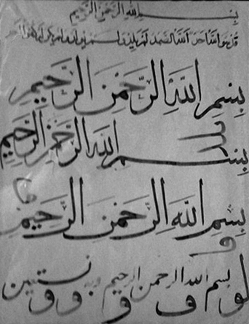
The 20th May just gone was Mohamed Zakariya’s 7oth birthday. He is not that well known outside the rarified atmosphere of Ottoman calligraphers but he has had a great measure of influence on people like myself over the years. His birthday was celebrated by a small group of his students in DC last Sunday which I was unable to attend but I want to record here something of his work and my own encounters with him. He is a fully fledged American, growing up in Santa Monica, California, where he taught himself arabic whilst working in a machine shop. But it was arabic calligraphy that became his forte. But he only achieved his  ijaza in the art, fairly late in his life. I clearly remember him telling me that after he began his studentship with Celebi, his master teacher in Istanbul, that all his earlier work was ‘no good’ or ‘rubbish’…I don’t remember the exact words. I know how he felt as I have often felt like that myself about much of what I do, but I would be quite happy with some of his cast off ‘rubbish’.

I first met Mohamed Zakariya in 1975 (or thereabouts) at his house in Washington DC where he gave me a rapid introduction to the fine art of Ottoman arabic calligraphy. I still have the page he wrote for me then (illustrated left). It was the first of many calligraphic pieces by him which I have accumulated over time as well as beautifully written letters and artwork (as well as, interestingly, some blocks of Eid postage stamps that he created for the US postal service). In 1975 there was little or no market for a calligrapher in the west, no matter how good,  and Zak (as I shall refer to him) was having to build kitchens at the time to make ends meet. But his house was an Aladdin’s cave of not only his calligraphy but working brass astrolabes and astronomical instruments, fine crafted boxes of pens, knives and burnishers and pens, cupboards, tables, beds, all made by him with non-electrical tools. All of it glowing with a kind of Ottoman magic.

He was the first proof I had that it was possible to produce high quality art and craft from scratch i.e. from basic materials. He said at our first meeting that the best ink, pen and paper you will ever use is the ink, the pen and the paper you make and prepare yourself. The same applied to pigmented colour and the use of gold leaf. This is a wonderful paradigm for self sufficiency but not as some kind of Luddite revenge on technology. It was really that the paper, the ink, the paper you made yourself really is better and that we have all been shortchanged by the commercial dumbed down equivalent that you buy in Rymans or Kincos or whoever your local art suppliers are. Because it is possible to be in control of the process from beginning to end it gives the calligrapher an overview of the whole process enabling him (or her) to refine, control and perfect the end result. When the veil is lifted you see suddenly how in the last hundred and fifty years the process of paper making, pen and ink production has been utterly usurped and commercialised in the name of convenience, not really to improve writing, but to make money. In recent years of course it has meant the wholesale abandonment of handwriting as an art.

Obviously we cannot expect everyone to make and prepare paper, pens and ink, or write brilliant calligraphy but neither should we wish that this knowledge is lost. I have always asked students of mine what would happen if tomorrow it all collapsed and you couldn’t buy these very things. Would life as we know it continue? If you value knowledge and its preservation and dissemination you will appreciate why this is a useful and almost obligatory knowledge to acquire. Zak seemed to have tapped a rich well of this knowledge and, as I said, I have personally benefitted greatly down the years from his researches and his example.

In my own line of of work, knowledge of calligraphy and its supporting crafts is vital, even though I myself have never qualified with ijaza in the Ottoman calligraphic craft. I went so far with it and only do it badly, but it did open my eyes to that world like nothing else ever could have done. To do it well is difficult and requires years of practice and guidance.

Above: Laqadja akum rasulun min an fusikum. An early piece of Qur’an by MZ.

It also opened my eyes to the whole history of arabic calligraphy and by extension, the whole history of writing. Ottoman calligraphy is the high art of arabic calligraphy but if you look at particularly kufic and andalusi calligraphic styles you can follow graphically the whole history of the spread of Islam across North Africa from Arabia into Spain. As I found my home in the Andalusi calligraphic styles, I also found my actual home in Andalusia. It makes complete sense. The style is also a lot easier than Ottoman calligraphy and in my opinion a better model handwriting for the general public who find Thuluth, Naskh, Muhaqqaq etc far too exacting. The public will say it is only for the experts and abandon any attempt to write beautifully.

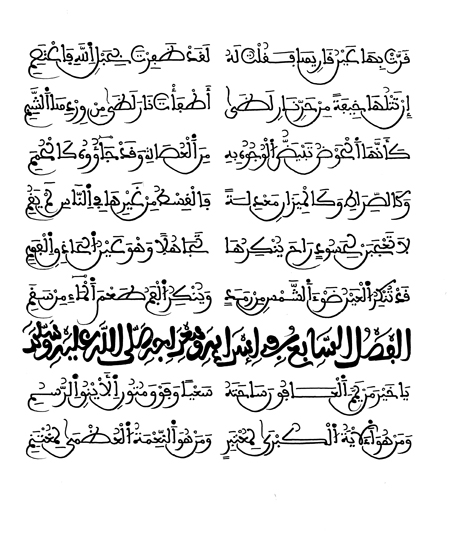
The Andalusians were less fussy about their calligraphy. It was primarily functional although for such things as Qur’an and poetry it would be beautified. Writing was principally for recording and disseminating information, translations, religious, legal and scientific works long before printing was ever a reality. This is why you don’t find very often calligraphy as wall decoration in Spain and Morocco as you do in Turkey and elsewhere, but mostly in books and manuscripts. It did appear in buildings as in the Alhambra and the great mosque in Cordoba, but very restrained.  Zak knows this writing style and you will see his Andalusi script published in books like the cover of the Aqida of Imam Tahawi (below) and the text of the Burda of Busiri (left) from Zaytuna and Sandala respectively.

The Andalusi styles are much more personal than the Ottoman scripts which are extremely disciplined even though to the trained eye the style of a particular Ottoman calligrapher can be detected. But the Andalusi style allows for much more personal interpretation. I can detect Zak’s hand in both Ottoman and Andalusi styles. It has a kind of flair to it that I honestly find a bit lacking in some of the middle eastern masters. He puts life into it.

There is a link to his web site on the side bar.

Posted in typography / design | 2 Comments

Not About Typography

This isn’t about typography, or music. File under personal jottings.

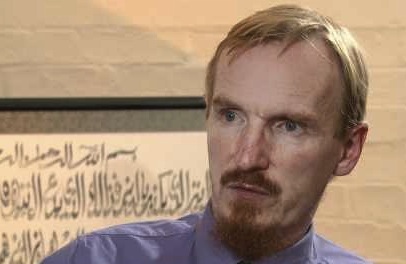
As a confirmed expat, my umbilical link to the old country is through my computer, like probably millions of other expats. Whilst tapping on my laptop a few days ago, out popped the disembodied voice of Abdal Hakim Murad (aka Tim Winter – left), the Muslim Cambridge University teacher and writer, in his Thought for the Day slot, early on BBC’s Radio 4 morning Today programme. It was a tribute to Khalil “Ken” Dale, the aid worker (a male nurse in fact) for the Red Cross, who was killed by persons unknown in that anarchic part of north Pakistan near Quetta, because of the non-payment of a ransom. I knew Khalil fairly well myself back in the 1990s when we worked in the same building in London. He had already been awarded an MBE for his work in Somalia.

His naturally slightly shy manner belied the courageous man he really was. He assigned himself to the most dangerous places in the world without a second thought. I think he was a man of destiny who somehow knew he might meet an untimely death, not that anyone’s death is untimely. Quite the contrary. As some air travellers were quoted as saying just a week ago, as they believed their Easyjet plane was to going crash over the Alps, “we thought it was our time”. That would be the correct judgement in my book. The shahid, the witness, according to both Qur’an and Tradition has a blessed death (or his or her time) and does not enter the interspace between life and death but crosses immediately into the next world and is alive.

At the time of the recent Bosnian war there were many accounts of the fresh graves of those who had died, smelling strongly of perfume. My own experience of this was when in the 1970s, Colonel Ata’ur Raheem, one of the first Indians commissioned into the British army, died at a venerable age in London. He co-wrote the well known book Jesus Prophet of Islam  and was a valued counsellor to our fledgling community at that time and much loved and respected. I couldn’t attend his funeral but managed to visit the military cemetery where he was buried the following day. Because there was an intense smell of roses around the grave I assumed that many bottles of rose water had been poured on the earth the previous day. I found out later that no perfume at all had been taken there.

To the western mind the word martyrdom is heavily loaded and associated in some way with failure not success. The more materialistic society a becomes, its shared love of this world makes it almost impossible to view death as a release and not something to fear. This isn’t a subject about which I feel fully qualified to speak but it is something which, as I get older, looms as an ever present reality – which does qualify me to say my bit. One of the diseases of the heart mentioned by Ibn Mawlud in Hamza Yusuf’s book Purification of the Heart (soon to be reprinted – watch this space) is false hope and to not accept death as a close and inevitable reality is mentioned as the biggest of false hopes. The collective disease of the hearts of men and women is what contributes to this breakdown of society. And at a certain threshold it becomes violent.

When violent anarchy manifests then kidnapping becomes one way of easily raising money or obtaining stuff. I have it on good authority from Venezuelans I know, that having your children kidnapped for the ransom of a car or a refrigerator is not uncommon in that country now. I believe it was Imam Malik who said that 60 years of oppression is better than one day of anarchy. I don’t think the Imam meant that oppression was somehow OK but was indicating how terrible anarchy is because oppression is about as bad as it can get.

A postcript to all this was Abdal Hakim’s Opinion article the same day in the London Times. It was an extended tribute to Khalil Dale plus some some statistics about the increasing conversions to Islam in the UK in spite of the terrorist outrages since 9/11 and the endless negative press around Muslims. For me he always has something interesting to say but judging by the subsequent comments on his Times piece, he had evidently touched a nerve. They were almost all (over 60 of them) obnoxious and carcastic. His opinions were clearly like a red rag to the rabid bull of the secular Times-reading underclass. It appears that the typical British islamophobe would rather have a one-eyed hook-handed Egyptian demagogue portrayed as the typical muslim – not an intelligent, educated and most of all, white, Englishman.•

The link to the Times article mentioned above:
http://www.thetimes.co.uk/tto/opinion/columnists/article3401700.ece

Posted in miscellaneous, religion, Uncategorized | Leave a comment

Ancient Prophets of Arabia

Following my tradition of announcing books I have worked on, here is a big one.

Dr. Mostafa Badawi, (a medical doctor of Egyptian origin), practices as a psychiatrist in a hospital in Medina and is hidden away in that wonderful city protected from those who might want to elevate him and claim him for their own. He treats the disturbed souls of Saudi as best he can but his real patients are us lot whom he has, over the years, supplied with numerous valuable translations including The Prophetic Invocations, Man and The Universe, Degrees of The Soul, Key to the Garden, Gifts for The Seeker and many more. Which are all a kind of mercy to the confused souls of this western domain and a window into worlds hitherto inaccessible to the non-arabic reader.

His little green handbook, The Prophetic Invocations, I  use every day and is almost talismanic in its benefits and used right round the world by many and has been for several centuries. The lesser known Man and the Universe ( second printing much improved) is actually a little gem which I read from cover to cover in Thaxted Church, Essex over ten years ago, waiting for a performance of Holst’s Planets, his cosmic orchestral masterpiece by the National Youth Orchestra as part of the Thaxted Music Festival. This highly rated orchestra was tackling one of the most difficult orchestral works in the repertoire, which utilises just about every instrument in an orchestra’s store cupboard and filled the whole width of this great medieval church. I was bagging choice seats for the concert which was being held barely 100 yards from my house in this enormous cathedral-like space so I took Dr Mostafa’s book with me to pass the time and perfectly primed me for what was to follow. Holst had written most of The Planets Suite actually in Thaxted where he lived for a time, and reading Mostafa Badawi’s book followed by this concert was for me an experience like no other. Anyone who is uncomfortable about music for whatever reason, doesn’t know what they are missing.

I digress into all this just as a warm up before the main act which is Mostafa Badawi’s most ambitious book to date, Ancient Prophets of Arabia and which I started work on some three years ago. Although it is a full colour production, it is not strictly a coffee table book, the kind of tome you place on your coffee table for the Hola photo shoot of your parlour. No this is definitely a work for reading and study as you will realise how little you knew about these great men, your forefathers. Dr Badawi has brought these men back to life, at least he did for me while working on it, not that they are really dead in the first place, and freed them from the prison of our old RE classes at school in which all prophets had large white beards and lived on a parallel planet. It’s also not a coffee table book, because many of the only pictures available were really low quality, some of places now destroyed and others obscure places of importance gleaned off the internet. But also we included some excellent pictures of Hud, in the Yemen, taken by Peter Sanders and pictures of Medina donated by the distinguished Japanese photographer Ali  Nomachi. It has maps, digrams and of particular interest to me one measured plan of the ka’ba and a rare photo of its interior. Given the limited resources available, the book has come out remarkably well even though we had enormous problems with the complex text. In my experience I have never seen a book before that was both a coffee table experience and hard-to-put-down academic work.

Aftab Malik of Amal Press says of it

‎”A sweeping narrative of epic proportions told by a master story-teller. Al-Badawi unearths gems from the archives of the Abrahamic traditions, making this contribution to the sira literature not only welcome, but unique. Reading this book is like taking a step back into ancient history with a learned guide holding your hand. Al-Badawi inspires, moves and leaves the reader in awe, as his erudition unearths the deep spiritual insights into the lives of the ancient Prophets of Arabia.”

This 219 pp hardback full colour book is in pre-press at the time of writing and is expected to be unveiled next month (May 2012). For more information and ordering, visit the publishers’ site at www.islamicvillage.co.uk

Posted in architectural, language, miscellaneous, music, Publishing, religion, typography / design | 4 Comments

Chocolate Bunnies

Easter is a strange time of year in Spain.

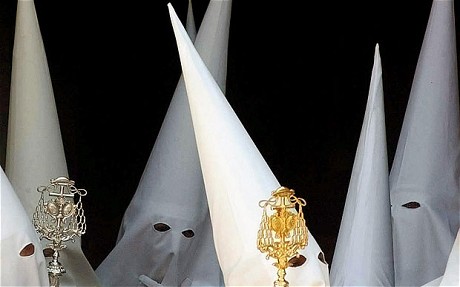
As a puzzled young mother said to me: How do you explain what all the chocolate bunnies, crucifixions and fireworks mean to a two year old boy. How do you? I suggested she crucifies the chocolate bunny and sends him up in a rocket. He’d understand that – sorry that’s rather macabre. No seriously, of the Spanish fiestas, and there is enough of them in Spain, Semana Santa or Holy Week is the biggest orgy of all, celebrated throughout Spain. An orgy of public penitence, street processions, white pointed hoods and giant wooden effigies of the crucified Christ figure, tears of blood dripping from his agonised face or alternatively the brightly statued images of the Virgin Mary and Child, carried by dozens of inebriated men shuffling down narrow streets, accompanied by heavy drums and trumpets with the occasional outburst of a solo flamenco singer – and it is very dramatic. Let’s not forget the obligatory and enormously expensive firework displays – the biggest bangs you will hear outside war time and billows of smoke, as if a bomb had just gone off in a Beirut street.

It’s an odd cultural and religious mishmash and hard to unravel. The hoods of penitents is a throwback, not the KKK on a European holiday, a celebration of public penitence with an echo of the Inquisition. But other parts of the processions, like the outbursts of flamenco singing (in some places in Andalusia) seems more to do with Spain’s moorish and muslim past – possibly. And what are the fireworks for if not just excitement? – no religious significance at all. The fiestas tend to vary from town to town and village to village. I know of one ancient fiesta in a mountain peublo where we lived around Christmas time when some local musicians would go round the houses playing really bad music collecting money (you paid them to go away) which went into a village fund for the poor of the community. I was assured the age old activity had nothing to do with the church and might have been inherited from the time of the bayt al mal in Muslim times. But from so long ago that no-one really knows. Right now, the fiestas stop people thinking too much about the economic crisis. Or as they call it, the “creesis”. It’s such a feature of Spanish life now, you even see Anti-Crisis bread i.e. cheap. I misread it as Anti-Christ bread

The Spanish are slaves to tradition which, like it or not, does help to keep rampant modernity at arms length but their traditions like bullfighting are grotesque, to put it mildly, and there is constant political pressure to abolish it. Catalonia has made it illegal but nowhere else yet. I suspect more for financial reasons than cultural. The bullfighting business admit the twitter generation just isn’t interested. In an earlier post I mentioned how if Islam had emerged in Christian lands it might have adopted some Christian festivals as its own. But I could not see Easter as being one of them. The resurrection of the crucified Jesus appears to me to be a pagan metaphor for the re-emergence of life from the dead earth, a repeating Quranic theme in fact, but devoid in Spain of any divine causation and basically a fertility rite. But despite all this, the human soul is able to bubble through the bewildering mysteries of Christianity and traverse the thin bridge into Islam.

I say this because recently I came across an interesting blog of an American Quaker who professed to be a sufi (?) and who regularly prayed five times a day and fasted – something more than many muslims do I suspect. But coming from a Quaker background myself I see a natural connection between the two. The Quakers emerged in the 17th century in Britain as one of the many dissenting Christian groups like the Ranters and the Muggletonians who were reacting against the established church who persecuted them one way or another. The Quakers abhored idols and, in most cases, the trinity and refused to take oaths. Their meeting houses were plain rooms with no altars, images or crucifixes of any sort, no liturgy and in England not even hymns. Take out the pews and you have a mosque. They were always pacifists and against slavery. They spoke always of the inner light and the equality of all people. Because they were the most trusted in their communities they began all the big chocolate businesses like Fry’s, Rowntrees and Cadbury’s and also banks like Barclay’s. In other words, trustworthy people of faith but with no protective shell of doctrine – something which they actively opposed. The Quaker  community I lived in just didn’t have answers to the questions I was asking as a teenager.

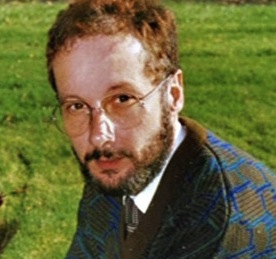
Left: George Fox who came from Leicester, who founded the Quakers.

Transition from a Quaker upbringing c.1970 to Islam meant having to put some of my pressing questions of holy war and the repression of women to sleep. At that time in 1970, the issue of terrorism hadn’t arisen. There was only one official custom-built mosque in the UK (Woking) and the word ‘muslim’ most people thought was a kind of cloth (muslin). Others with similar backgrounds to me have made this exact transition for the same reasons. But the final obstacle for me was something much subtler and to do with the veil of doubt inside the heart which I believe began with the massive propaganda campaign against the Turks and Islam by that original neocon Lloyd George, prime minister of Britain at the time of the first world war and which must have influenced my parents’ generation deeply. Lloyd George brought in the writer John Buchan from South Africa who worked in military intelligence there, to create loathing of the Turks who had allied themselves with Germany. His famous books, The 39 Steps and Greenmantle were designed to seep fear and hatred of an unseen foreign power deep into the British psyche to support Lloyd George’s war plans. Blatant propaganda.

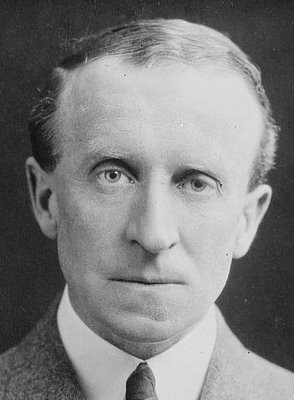
Buchan (left) also came up with the slogan The Turk Must Go! (see Fromkin’s book, A Peace to End All Peace) It was convenient for the Empire to portray Africans, Indians, Chinese and Arabs as “the other”, including Jews – not us, and therefore inferior. I think I, and most British people of my generation grew up with the echo of this and it was a strong hurdle, a very subtle hurdle, that had to be overcome. These were the working cogs of Empire which were still cranking on at that time with monstrous colonialists like Cecil Rhodes doing their worst, unhindered by law or morality flying the twin flags of Christianity and trade (ie exploitation) up and down Africa.

Quakerism was proof to me that Christianity could produce noble people who had little or nothing to do with the Semana Santa, the self-crucifiying Phillipinos or the extreme right wing fundamentalists in the USA. No wonder Monty Pythons’s The Life of Brian struck a chord with the public. But seeing the need for sacred law (ie doctrine) is the hardest part of the bargain for the Quakers, but if only they knew how it would strengthen and complete their belief and elevate their lives they might well change their minds. After Quakerism there is only one place to go.•

Posted in miscellaneous, religion, tassawuf, Uncategorized | 1 Comment