Relics of the First Computer Age


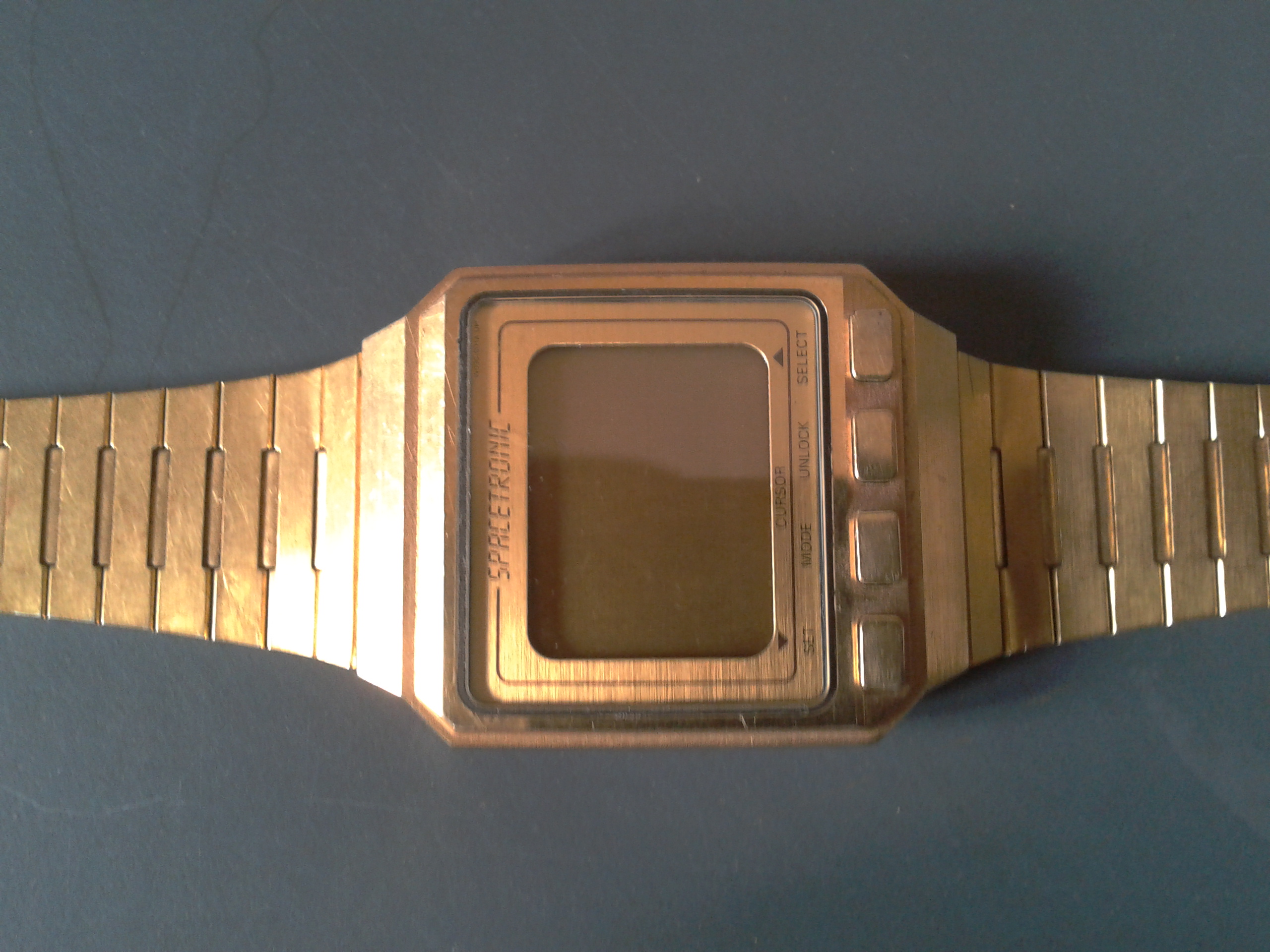
I just discovered in an old drawer a unique Seiko digital prayer wrist watch made in about 1986 in Japan. What’s more it’s gold plated which makes it pretty unique. How quickly things seemed to have moved on from that time through the 1k Spectrum computer to the sleek 27″ desktop flat screen computers we use almost universally now in the developed world (ie those who can afford to buy one). Back in 1986 I was working for an advertising agency near London who were handed the account to advertise the new Seiko Spacetronic watch which had the Muslim prayer times for most cities in the world programmed into its micro chip. I had to publicise it as best I could and we did a launch in London and got front page in the Guardian with a short article which, if I remember right, registered interest mixed with a bit of amusement or was it sarcasm? I also had to organise an interview for ITV by reporter Mark Austen, with the Egyptian inventor of the watch, Ibrahim Salah (I think this was his name). The example I had was a sample (one of several) we had in the office which I appropriated when the company went bust.

Prayer clocks at that time were nothing new but were mostly fairly primitive affairs imported from Pakistan or China with analog dials and usually with the recording of a call to prayer intermingled with bird song and running water – presumably to get you out of bed a little more quickly to run to the bathroom. But the idea of a prayer wrist watch was quite unique. I don’t believe it was a commercial success but was unique enough to be placed in The National Museum of Australia.(Object number 1995.0009.0001) So if they are reading this, maybe they would like my watch to add to their collection. All offers considered.

In 1986 in graphic studios we still used galley proofs, Letraset and wax machines and scalpels to stick artwork together. So in 25 years or more we have left all that behind for the comfort of a screen and mouse. And I really don’t miss it. But for those who were born 30 years ago they did miss it completely in a different way. But all that drawing board work taught you a lot about type and how graphical things are constructed. We also used pens and pencils much more and such things as RSI and carpal tunnel syndrom were unheard of. The most we suffered from was back ache leaning over a drawing board. Seeing the graphic in front of you in a tangible form on paper has its plusses. The virtual world of the computer can be very misleading.

Now in 2012 we have our personal prayer apps for our smart phones which call the prayer in a style of your choice (Makka, Medina, Cairo) or in the case of one app your own recording. It is slightly disconcerting to hear your own voice doing an adhan in the dark of dawn or more so if you are sitting talking to a doctor (as happend to me) and have the thing go off in my pocket…Allahu Akbaaaaar…….. The app even knows where you are and the correct times. It is a far cry from judging the time of the middle prayer by the shadows, something which should not be forgotten, but I confess to a certain dependency on this kind of gadget (bless its little circuits) as it is a real reminder of these cosmic moments through the span of the day.

All very useful in fact but a reflection too of how atomised and scattered we have all become with our personal muezzins calling us to prayer in our own homes or offices. Outside of the Muslim lands a public call to prayer is rare and in places like lovely old secular France probably illegal. In Granada you will hear the adhan (not amplified I might add) called out at all the prayers except the dawn prayer, in the Albaycin, the old Muslim quarter of the city. But without a PA it is quite faint but audible even half a mile away, if there is not too much ambient noise. Not so in Istanbul of course where the amplified adhans thunder down every street leaving you in no doubt. The power of such a thing meant that Liam Neeson the actor became fascinated with it when filming in Istanbul recently, to the extent that he was considering embracing the religion!

It is quite sobering to see something in a museum like the Seiko prayer watch, which was once a novelty gadget to marvel at – now just a useless piece of metal. A reminder that we will all qualify for a museum in the not too distant future in the Relics of the First Computer Age section.
Posted in typography / design | 5 Comments

Cosmic contradictions

Global-warming deniers are crackpots as bad as those who thought the Earth was flat, according to Sir Andrew Motion, the new president of the Campaign to Protect Rural England (and ex-English Poet Laureate). It’s interesting to me that to consider the Earth is flat is perceived in this most disparaging way – by a poet of all people. And I’m no global warming denier or Flat-Earther.

If you didn’t know the earth was a sphere you would naturally believe it flat as what we see is a horizon all around us i.e. the edge of a flat earth. Climb up high enough and it quickly starts to curve. I once went up to 60,000 feet in Concorde and yes, I can assure you the earth is definitely curved at that height. (11 miles up). So I can safely assume that as you go higher it gets more and more curved until it becomes round. Now I’m no scholar, my only qualification being an honours graduate of the madrassah of hard knocks, so I thought it wise to ask those more knowledgable than myself. Is the earth flat or round? Answer: it’s both.

So according to sacred law the earth is flat (so I am told), which is why the times of prayer are defined by the setting and rising of the sun over the perimeter of what is the flat disc that we all perceive wherever we live. In the desert at night the sky is seen as a vast hemispherical chronometer and guide which moves slowly and majestically over our heads…whereas we know that scientifically the earth is spherical, rotating and moving itself through the cosmos.  So, Mr Motion (appropriately named methinks), it’s not that simple. If we know the earth is a sphere why then is the rising and setting of the sun so critical. (and of the moon come to that). But our human experience, unless we are orbiting in a satellite, is of the daily event of sunrise and sunset,  so for the purpose of prayer it is definitely flat. Someone tell me if I have this wrong.

So the great cosmos of sun and stars we see is, in other words, just a giant astrolabe to orientate us to the direction and times of prayer. We weren’t some accident who happened upon the universe of planets, stars, suns and moons in some random fashion like a bunch of time travellers who landed in space vehicles. It appears it was all made for us. In the open deserts of Mauritania or Morocco this sight must be truly awesome. Where the constellation Orion rises over the horizon is also, according to the Mauritanians, the direction of prayer – i.e. Makka. I’ve tested this in Spain and it holds true but I don’t know if this applies elsewhere in the world.

This touches very much on the heated disagreement in North America about the prayer direction (fascinating as it is peculiarly American). Some intelligent American scholars I know have seized upon a football or a balloon and a piece of string to illustrate how the polar route is the shortest route to Makka as if our prayers are like aeroplanes. In view of what I have previously said about the flat earth disc and sharia law, I wonder if they are missing the point. Fortunately where I live in Andalusia we are not faced with this dilemma. The aggressive selling of the “scientific” viewpoint in the last century makes it yet more difficult to see the wood for the trees and to have a balanced viewpoint. We have to all relax and learn to live with this paradox as every year when Ramadan arrives the whole world community divides on its disagreement about another very cosmic thing– moon sighting.

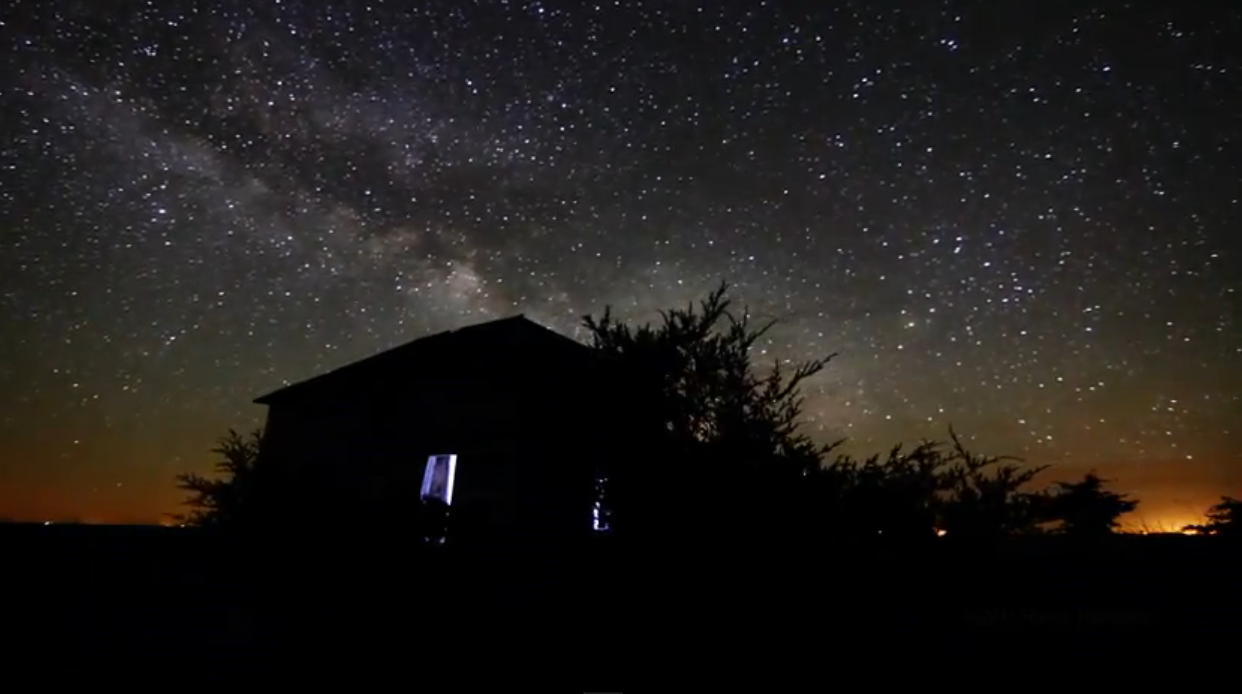
§ See http://dakotalapse.com/ for a selection of awesome cosmic time lapse movies (illustrated above) of the milky way.

Posted in miscellaneous, Uncategorized | 1 Comment

Be Near the Earth

Be Near the Earth is a phrase that caught my eye some months ago on a Zaytuna College web page. Sh. Hamza was quoting the advice of a Mauritanian shaykh he knew and its many meanings I thought worth expanding upon.

I imagine that many muslims who might be reading this are urban dwellers and more than likely born and raised in an urban or sub-urban environment. I suspect many such folk are more comfortable in such environments and find the country slightly threatening. The words “I’m a townie” have been spoken to me many times. And as far as being close to, and part of the society, Muslims seem to have flourished in the urban context. Indeed in Andalusia it is well known how civilised the medieval Muslim cities of Cordoba and Granada were, with street lighting, drinking water flowing to private houses, hundreds of bath houses and many of the creature comforts we associate with the post Victorian industrial age.

But compared to the modern tarmac roads, motorised transport, electric power, town gas and high rise apartments (very far from the earth), the medievals lived much nearer the earth. For a start their cities were limited in size so that people had access to the countryside and the dependence on horses and animals, meant closer daily contact with the natural world and a big involvement with e.g. olives which gave them oil for lighting, food and its wood fuel. And pickles. The dwellings were in general one or two stories. The technological world, necessary though it is in this time, has made most people sacrifice their daily proximity to nature. And as someone who at one point in time suffered from a surfeit of computer use and car driving (trapped nerves, posture problems, eye strain) I’ve had to find a more acceptable balance between the demands such things as the computer and cars were making on me and the obligation I have to my own physical and spiritual health. A better balance is always the more productive solution. One German architectural firm I know of, found that if its workers lived next to a garden into which they could constantly walk, they worked better and were happier and healthier. This is a lifestyle I have adopted now for many years now. Mixing my office work with gardening, wood chopping and other kinds of recreation. Enjoyable. Who needs to retire?

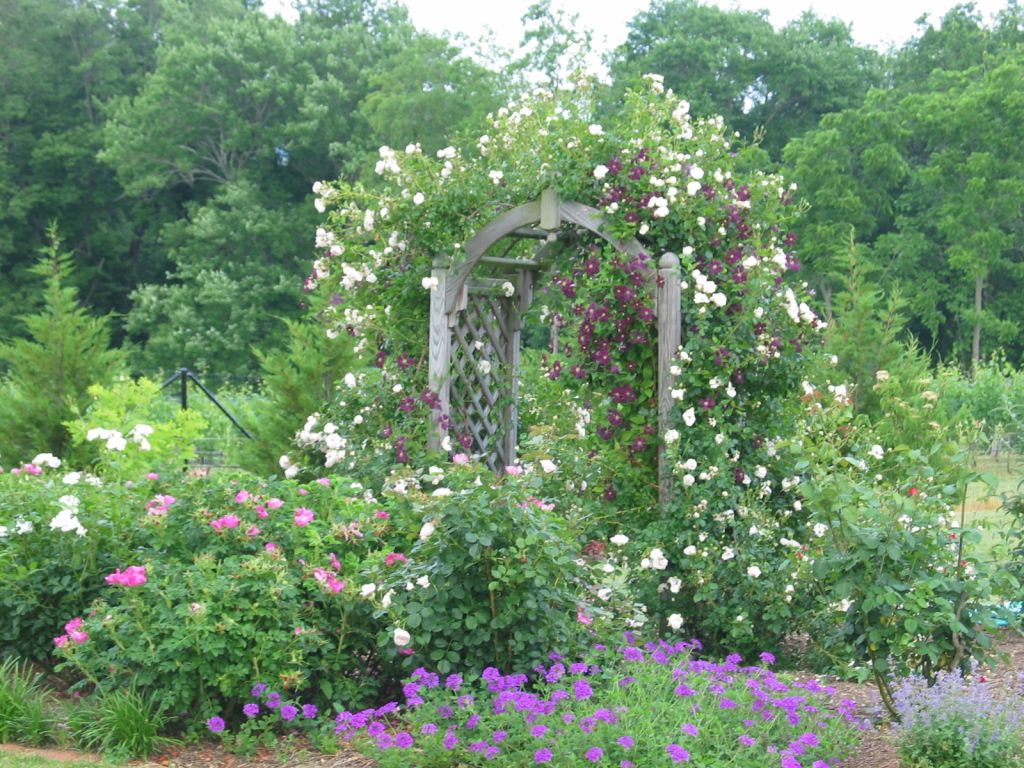
Be near the earth for many is literally touching plants, digging in their gardens, handling soil, planting seedlings, manure, composting etc., and you can do that not only in the country and the suburbs but increasingly in cities, on roof tops, waste land and on balconies. It’s an activity that keeps you in tune with the cycles of the day, the seasons and the miracle of seeing seeds sprouting through the earth. The reality before you of the many Quranic ayats about God bringing forth life from dead earth. Good exercise, better and cheaper food and the grateful use of wasted ground space.

But even for those who are born and brought up or who can afford to live right out in the country, there is often utter disregard for any kind of harmony between man and nature. In fact my last memories of walking in the Essex countryside, before high tailing it to Spain, was of constantly avoiding enormous farm machinery spraying poison or chemical fertilisers on the exhausted earth. These spraying tractors had enormous extensions which would unfold at the commencement of their work like a giant mechanical spraying mantis.  The word Koyaanisqatsi meant in Hopi language “unbalanced life” or man out of tune with nature. In this case fat cat corporate farming.

But even up here in the secret valleys of Andalusia some folk seem far to eager to abuse the countryside and by extension themselves. I am told that 25 years ago the valley of the Alpujarras was almost wiped out by the use of DDT. It killed wildlife in a big way purely so the greedy little farmers could see weed-free olive groves etc. After it was banned, wildlife returned, but still you see little men walking around spraying their trees from a tank on their back– it just looks so odd. Trees are vulnerable to some insects and disease but there are effective ecological ways of dealing with these problems.

Probably the farmer activity I find most offensive and one I consider very far from the earth is what is called strimming, or what Americans call weed-whacking. Many times I have thought the strimmer was something straight out of hell sent to test my patience. For hours on end I would have to endure the perpetual stop-start whine of the strimmer as a neighbour went up and down his land hacking down the weeds – oblivious of his violent intrusion of the peace. The operator is covered with protective head gear and gloves like something out of a bad horror movie, and is amazingly disconnected from what he is doing. A quite dangerous activity too. One local man lost an eye doing it and I have been showered by stones when driving my car as council workers strimmed the roadside. A strimmer doesn’t cut, it smashes indiscriminately.

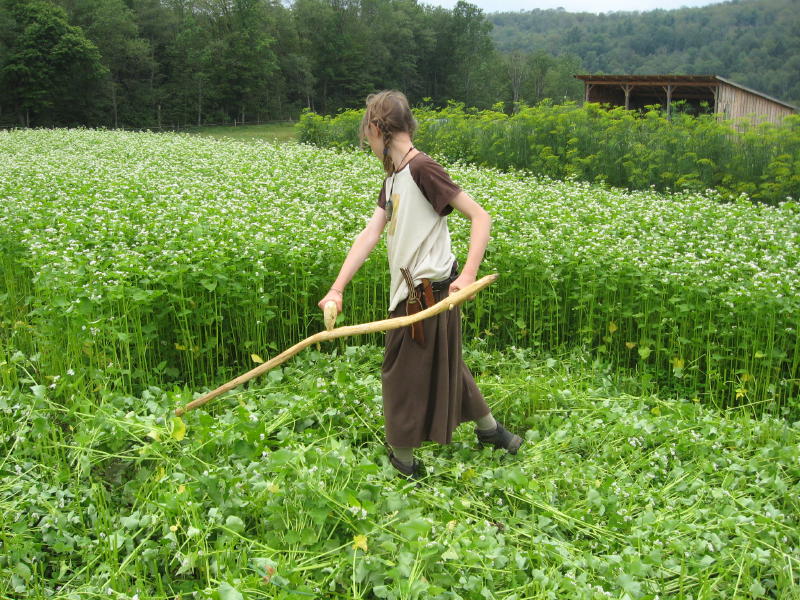
What the strimmer replaced was the scythe, the ancient, dignified and very effective way of cutting, grass, weeds and of course wheat. All that is needed is the scythe (much cheaper than a strimmer/weedwhacker) and knowledge of how to sharpen it and some muscle. Who knows how to sharpen anything anymore? Many believe an experienced scyther can easily keep pace with a strimmer any day. But the hard pressed farmer is sold these ‘labour saving’ devices and has to keep up with his neighbour. You can’t even buy a scythe round here now.

This is the model to me of man far from the earth. I’m not a romantic and would accept that in certain situations the technological solution is appropriate. I drive in cars and fly in planes though rarely these days, and only when absolutely necessary. But because I really loathe the mechnical solution doesn’t mean I don’t make concessions – but I make the concession fully understanding that the other way is preferable. Sometimes I think I am fighting a lonely campaign against people willingly drowning in technology, lemming-like. I often reminded calligraphy students of mine what would happen if tomorrow they couldn’t go and buy paper, pens and ink in Rymans’ or Kinco’s or wherever you get your writing supplies. Could they make it themselves? If you had no electricity could you survive or would you just curl up and die. My thesis has always been that the ‘near to the earth’ solution is not only sustainable but actually better than the hi-tec solutions. A matter of quality over perceived technological advantage. In previous posts I have harped on about PA systems, disappearing calligraphic styles, musical modes and so on. It’s all connected.

Posted in typography / design | 4 Comments

To Serif or not to Serif?

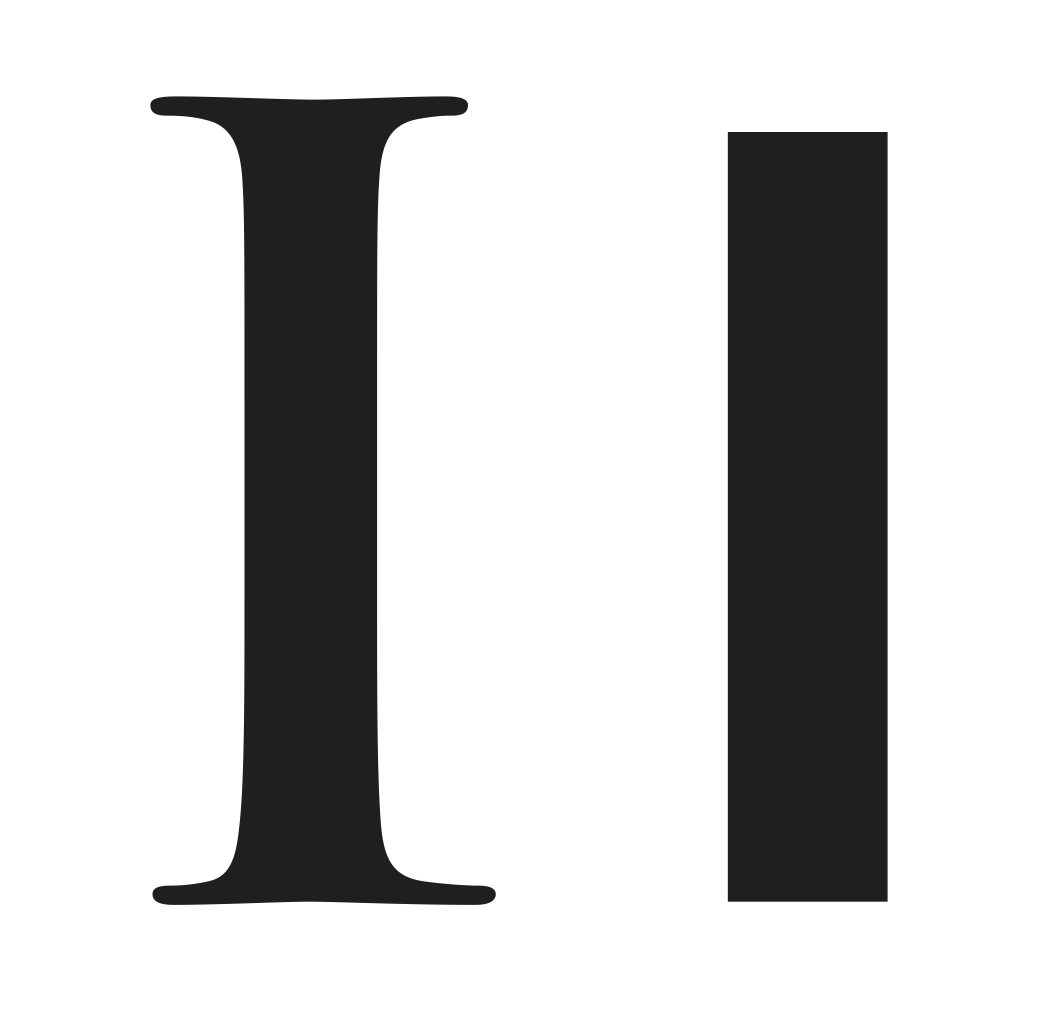
There was a time when to make something look cutting edge you just avoided serifs, those little embellishments on a letter of type that stops it looking like a block of wood. It was that simple. Helvetica as opposed to Times, News Gothic as opposed to Garamond. I’m talking typography again but this wasn’t the only realm in which the modern look shaved off ornamentation and embellishment for a fashionable stark machine finish.

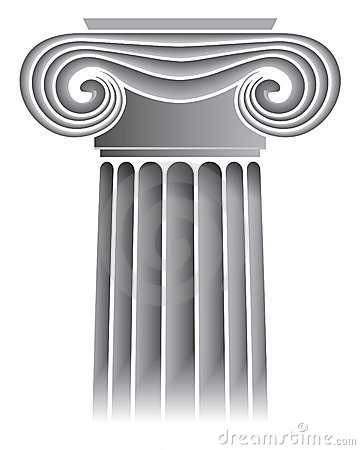
This is just an example of the popular conception of modern, and was so, even a hundred years ago or more. But what was, or is, modern? If modern is really another word for new, how come the really modern styles began in earnest as early as the first decade of the 20th century. Indeed modern was new – once. It’s a semantic problem no less, but with an interesting history. The modern age heralded air travel, high rise
buildings, machines, a clean swish look, devoid of decoration or the fanciful use of, for instance, the capital of a column – the architectural equivalent of choosing non-serif Helvetica over serifed Times.

The way the public perception over the course of the 20th century was eased into the use of type without serifs marked a sea change in culture. Which is why we look at things like the type used in the London Underground and we think ‘how new’ but it’s almost a century old, designed by Edward Johnston in 1916. The same with slab serif faces like Rockwell which are timelessly new – contradictory though that may sound. Modern was a style just like any other style.


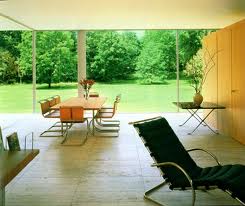
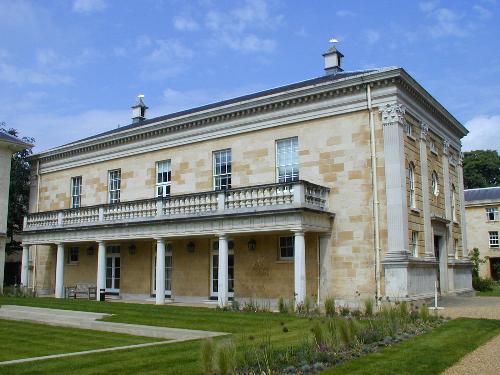
‘Modernism’ surrounded me at the Architectural Association in London, back in the 1960s when I studied there and it was a creed that few wavered from. It was a diet of Le Corbusier (above: Ronchamp), Mies Van de Rohe (below: Farnsworth House) and Buckminster Fuller et alia, and just about all the student work reflected this, my own included. It was the fashion, although the theme of teaching was always ‘meaningful spaces’ and ‘structural language’ etc., and much which was quite beyond me of architectural mumbo jumbo. However, one student in my year stuck to his guns and only designed in classical architectural styles, whether it was a petrol station or a vast hospital and he has done very well by all accounts, designing in the said classical styles for particular clients. Of course in these times some architects specialise in classical architectural styles as there is a demand for it. Others specialise in Gothic. Prince Charles’ favourite architect, Quinlan Terry has designed  important extensions to several Cambridge Colleges (eg Downing College: below) in classic styles much to the chagrin of competing  modern architects. Anyone who reads the newspapers must be familiar with Prince Charles’ on going spats with the modernist lobby, some of whom I have known and who rile at his championing of the traditional.

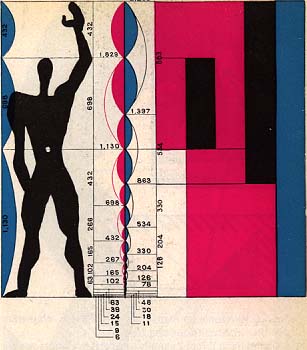
Modern Cambridge college architecture, like the Halls of Residence at Queens and the Faculty buildings on the Sidgewick site are monuments to the vast egos of modern architects like Norman Foster, James Stirling and Colin St John Wilson whose buildings represent to me a kind of eccentric and barren desperation with none of the feeling of beauty that Le Corbusier’s buildings inspired in me. Although the polymath Le Corbusier could be accused of just setting a ‘new’ fashion, which which was aped so badly and inappropriately all over the world, his own designs had their roots in an understanding of Greek proportion and his own humanistic proportional system, the Modulor (left) , based on the proportions of the human form. And he did all that with only one eye. This idea approaches sacred geometry in a way, the human form being of sacred design. It gave a human scale to every aspect of his designs. Although I know of no religious leanings he might have had, basing his Modulor on man approximated unwittingly sacred proportions as man is of nothing but divine origin. The head, arms, hand, foot, legs, torso and feet are all of divine design and nothing if not traditional.

The Cambridge Faculty of Divinity (St John Wilson), The Law Faculty building (Foster) and the History Faculty (Stirling), all next to each other on the Sidgewick site, are individually totally paradoxically un-functional buildings in different ways and have suffered many user complaints over their short life and have needed very expensive renovations since opening, in the case of the Divinity and History Faculties.

But the worse thing is that they look like redundant dinosaurs of vanity and ‘modern’ egocentricity plonked into an ancient university city. These building symbolise to me all that is wrong with this heartless technocratic age, founded on money and prestige with no link to humanity or human scale, in any form, all encased in chrome steel and tinted glass. How ironic that the Faculty of Divinity has no place of worship in it! It used to have its own chapel in its old premises on Trinity Street some years back. Why does the History Faculty building reflect nothing of history but looks like a curious L-shaped glass roofed factory built of industrial red brick? And why does a law building have to look like Stansted Airport or a city bank?

Divinity Faculty: Left
Law Faculty: Left Below
  

In the 1980s the Bin Laden Construction Company in Saudi who were responsible for the reconstruction of the Haramayn, offered me a job of removing human beings, by computer pixel replacement, from photographs of their new buildings like some kind of photoshop neutron bomb. Speaks volumes doesn’t it? I also worked on a fascinating film for the same Saudis about Medina and the men who worked on the original extension of the Prophet’s Mosque back in 1948. The film was rejected because it was about people. So it’s a pretty universal disease, this ‘modern’ dehumanising tendency.

As usual on these issues I find myself standing in the middle of the road, a dangerous place to be, as you get swiped by cars going in different directions. I find minimalism praiseworthy and I understand the reaction to the lavish visual and romantic excesses of the Victorian Age, but on first seeing medieval mosques in Morocco I saw how tradition and simplicity could marry perfectly together and how geometric decoration like zilij (anathema to the modernists) can be scintillating, elevating and totally integral to the building. How the modern architect loves vast uninterrupted surface. No clutter, no humans, no colour, no pattern. Visual puritanism.

Alexi Sayle, the seditious comedian and writer, wrote a little known short story (from The Dog Catcher) about a representative of this genre of architect, whose house is a modern sanctuary in Belgravia with glass staircases and no clutter but whose wife secretly rents a council flat filled with her plants and fluffy animals. Alexi bites deep into the hypocrisy of the modern architect and from my own first-hand experience gets it dead right. The universe of Alexi’s architect collapses dramatically when he finds someone has written Kilroy Was Here on his pristine exterior road facing wall. This hypocrisy needs deflating really badly but to challenge it now is to open yourself to a barrage of hate.

I don’t approve of everything the Prince does but at least he fearlessly confronts faceless, corporate culture and its hideous constructions. His rather anodyne neo-Georgian buildings are a welcome change from the general trend of techno-industrial brutalism but only a well-heeled minority appreciate it or can afford it or even care. Soon I hope he will be attacking HS2, the new pointless (excuse the pun) high speed railway line proposed through central England. All strength to him I say. This £30 billion white-elephant-to-be is like giving an old man with a nice wrinkled face a lobotomy and plastic surgery in the hope he might run in the Olympics. Britain is being systematically and senselessly strip-mined to satisfy corporate balance sheets and faceless, cultureless men in the city of London. (and the unions!) As one wit observed, HS2 will, on completion in 2025, drag Britain into the 1980s which is when most European and Asian countries began comparable high speed train services.

So those little serifs are well worth the trouble. Sans-serifs have their uses and can be beautiful but you have to keep a watchful eye on them. Serifs are like the eyelashes on the human eye. Without them the eye looks all wrong.

Posted in architectural, miscellaneous, typography / design, Uncategorized | Tagged , , , , | Leave a comment

The Psychological Study of Typography

This might all be a bit arcane for most people but as everyone these days reads typeset text (when did you last get a handwritten letter?) then it’s just as well you know what underpins the science and craft of typography. It’s right that I should return to this topic as of late I have been diverted into all kinds of rantery on unexpected subjects.

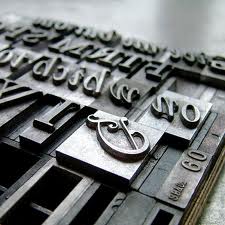
Hand composition: In the early days (like 4-500 years ago) at the inception of typesetting, many of the rules of type were defined by practical considerations of hand composition like the width and length of metal segments, whether actual characters or blank line spacing (ie leading) and the options were very limited. There were no rules really. Whatever sufficed. It was an imitation of what could be done very skilfully by hand. But with all this new 21st century digital gadgetry at our disposal, we can dial in absurd point sizes like 25.578pt if needed, which leaves the process of hand-set type so far behind but also opens the door for an unholy mess. Computers were not initially created for design use but as business machines, and their use of type initially was horrendous. The ubiquitous Times New Roman and Palatino, fine typefaces in the right hands, were thrown to the masses as they were included in every PC sold since 1985, and the result was typo-anarchy.

e-books: With e-books you can now adjust the size and style of the font and whether the text is left, right or justified. One dyslexic I know of, claims that his inability to read easily was because 99% of typeset text is justified, creating a continual variation of inter word space which can confuse the eye. With Ipads, Kindles etc you can adjust the text till you can read it with ease whether you are a child, middle aged or elderly, each group requiring a different size type. You must have seen in your local library large text books for children or for old people. But there is much more to a comfortable, even inspiring reading experience than just point sizes and word spacing. Which is why a lot of designers are unhappy with what e-book readers are giving to us all. Read on.

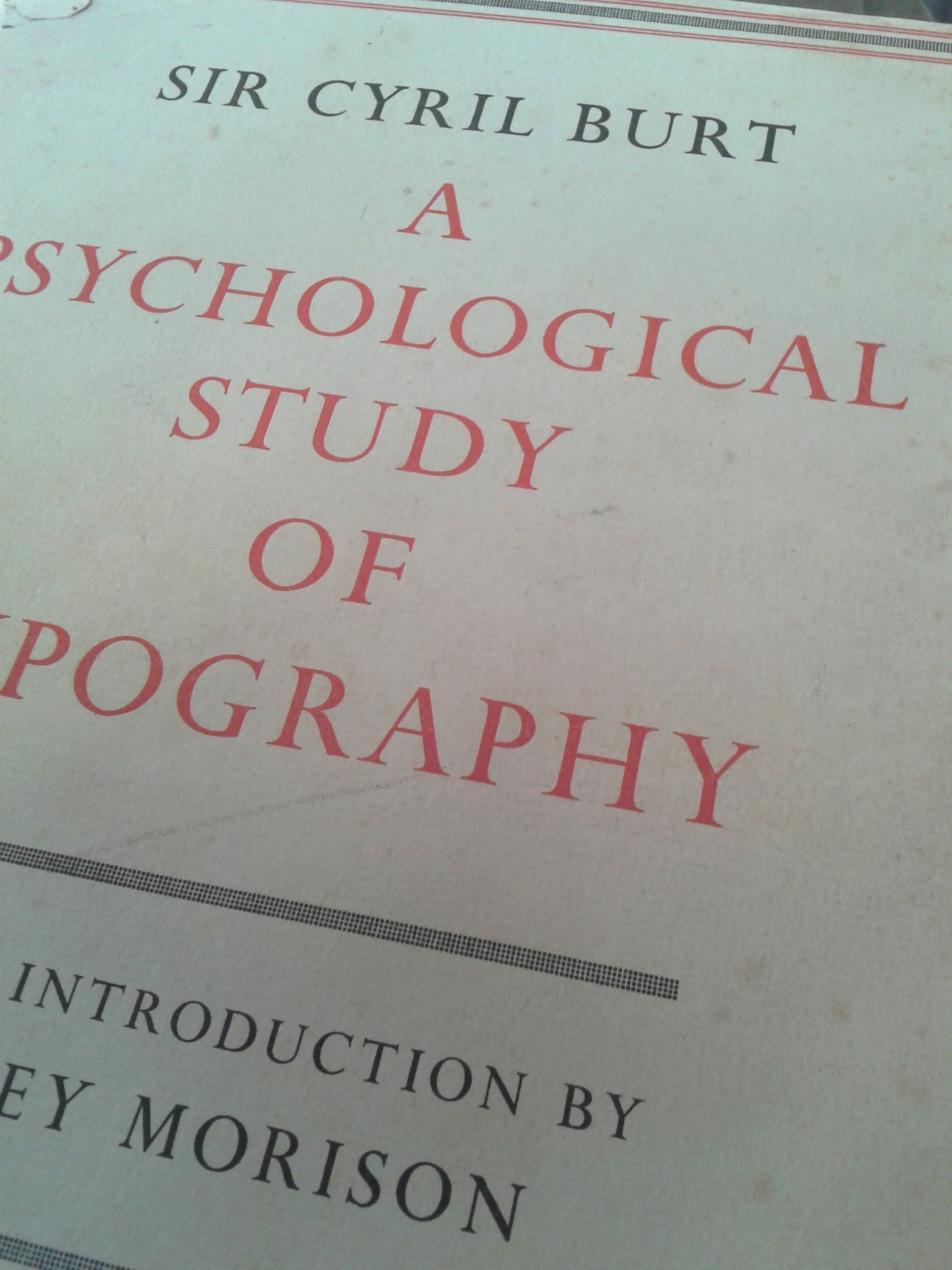
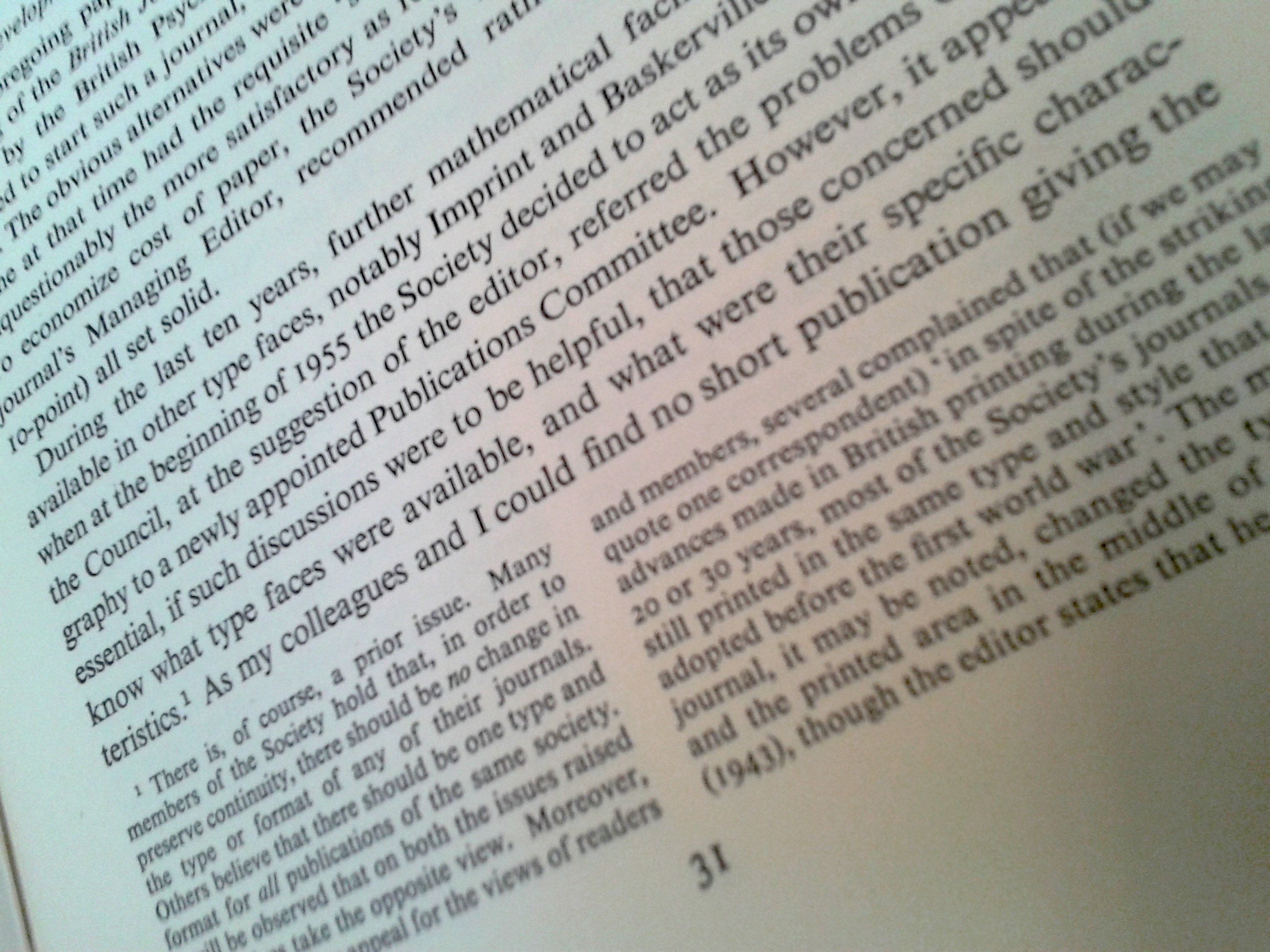
I’m relating some of this from an excellent and long out of print book by Cyril Burt, printed in the mid-1950s in the UK by Cambridge University Press—The Psychological Study of Typography. The book itself, finely designed and typeset in hot metal and printed on quality slightly off-white cartridge is an example of the classic (and timeless) school of typesetting to which I firmly adhere and which makes reading (and typesetting) a pleasure and not a chore. He does appraise a few of the text faces available at the time 60 years ago but more than that, he gets right into the exact process that is going on as your eye scans the page leaping from word to word and from line to line and what tires the eyes and what doesn’t. Cyril Burt’s book is meticulously set in Times New Roman, the most common of fonts, and it’s as you have never seen it used before. No coincidence that he found it the most readable of typefaces in his researches. I realise that times have changed and that the common man has been given a power that was confined to specialised trades in the past. Which is why it is important that the common man now gets to grip with some of the knowledge hitherto hidden in trade print shops and typesetting studios.

He determines the relative optimum line length and leading for given type sizes and the essential ‘colour’ of the text i.e. lack of what are called ‘rivers’, white gaps caused by excessive inter word spacing, all to provide an easy reading experience. Even the density of the ink is critical to the reading experience. How the text sits on the page enters the realm of golden section ratios, the age old traditions of page design (influenced by hand scripted bibles) and in some case just what the publisher can afford in term of real estate. Publishers of trashy airport thrillers will often print on as much of the page surface that is decent and on the cheapest paper available. Most publishers will admit to having to make compromises on print area as wide margins put up the price. There are no fixed rules on this but a page of text (and or images) either pleases and is readable or it isn’t. Cyril Burt’s book is a guide and in a sense does lay down rules. But as with everything, rules have to have meaning and a purpose and often stretched where appropriate.

A summary of the intent behind the book could be stated thus:

  • Using tests of speed and comprehension, we have studied the influence of type-face, boldness, size, interlinear spacing, length of line, and width of margin on legibility both with children and with adults. The results have furnished provisional norms for children’s reading books and for scientific journals such as the present.
  • Factorial methods, supplemented by an analysis of introspections, appear to yield a classification of both readers and type faces based on aesthetic preference; and the data incidentally obtained throw considerable light on the reasons for such preferences.

If this subject really interests you, I suggest you look for an original edition on the internet – for a price between $30-60. It is a specialised subject but one of these these subtle things that impacts on our daily lives. Useful knowledge in other words. This applies equally to the typesetting of arabic as well.

Posted in typography / design | Tagged , , | 3 Comments

Revenge of the Christmas Trees

Recurring respiratory ailments at Christmas time is now being attributed to a mould on Christmas trees! What a good reason for you not to have one in the house if you are tempted, fearing it may be a step too near assimilation into western ways. But you can always drape the coloured lights outside on a tree, as many people across Europe do and I must admit it does cheer things up at a time of the year in England when it is overbearingly grey. But in the multicultural Britain of 2011, this time of year always seems to highlight religious differences. But this really shouldn’t be the case as I see it as an opportunity for some smart bridge building.

Dr Muhammad Tahir-ul-Qadri, a highly regarded and very popular scholar from Pakistan makes out a very good case for Muslims celebrating Christmas as a mawlid for the Prophet Isa, alayhi salaam, as this negates the Christian assertion of his godhood in that he was born and created as a man. In fact Dr Muhammad advocates a mawlid for any prophet or friend of God. He adds that in fact every jumu’a prayer is a mawlid for the prophet Adam as this was the day of the week he was created. After all, muslims celebrate Ashura on the 10th of Muharram, which originally was a Jewish festival remembering the day when Moses defeated the Pharaoh. Had Islam originated in a predominately Christian culture no doubt we might have absorbed some Christian festivals.

As someone who grew up around all the trimmings of a typically 1950s English Christmas I would say there were plusses and minuses. It was magical, a time of presents, carol singing, a large family gathering but also with a good measure of over indulgence and eventually sibling quarrelling, some indigestion and usually a frantic mother left for too long in the kitchen. As my parents were Quakers there was no heavy drinking; a bit of sherry in the morning and cider at lunch was as far as it went. It jollied things along. The typical Victorian style family Christmas in other words.

Now jump ahead 50-60 years and we have a quite different landscape where few people actually know what they are celebrating anymore and a time of great unhappiness for some. Participation in religious Christian worship is much much less than it ever used to be, with open atheism quite a common thing in what has become, in the UK, a quite secular materialistic society. No-one can deny that Christmas has become a massive commercialised binge on which it seems the fate of the nation’s economy now hangs! But on the edge of it all are families of other faiths testing the waters, wondering if Christmas means anything to them.

People like myself, who came into Islam in the early 1970s in London, were faced with quite a brutal ‘reconditioning’ by our first teacher. Christmas was presented to us as the ultimate ritual of godlessness, the usurping of the pagan festival of the birth of the Roman sun god, by the Catholic church many centuries ago. So we had to be reprogrammed. Our group of young muslims at the time were forbidden to visit their families and instead we all went into a three day retreat in our zawiyya. Our zeal was unmatched anywhere and we really thought highly of ourselves and how revolutionary we were. I’m not saying a bit of re-programming was not necessary after the crazy decade of the 1960s but in hindsight I do think the method was harsh and misguided. Our then teacher was not a family man and he considered all of our character faults came from our various family upbringings – a fashionable theory of the time promoted by psychiatrists like RD Laing – and that Christmas was central to the illness. It was curious, as our venerable Shaykh in Morocco had stated quite clearly to us fledgling muslims, that we had two Imams: Muhammad and Jesus, on them both be eternal blessings and peace, which suggested a degree of tolerance of our Christian past and some respect for our parents, the family being by tradition, under the Throne of God and non-negotiable.

After that social experiment all broke up in the early 1980s we managed, as a family, to find a much more natural way, as muslims, to deal with Christmas. We would cook a turkey, as this was the only time of the year you could buy halal birds, and invite friends around for a big meal. At Christmas in the UK the whole world closed down around you and there was little else to do. So this became a yearly event and we have had it most years for over 20 years now.  Often there were travellers passing through, Bosnian refugees, families who weren’t celebrating anything and just people we knew who were living alone. The English winter is very depressing at the best of times and people need uplift … good company, pretty lights and good food – a little bit of joy. But the intention was everything. We were certainly not lurching back into the ways of the past. On one occasion in the 1980s I had seen fairy lights at a Pakistani mawlid in the north of England and realised then that it was time to reclaim these things for ourselves. So now at Eid time and Mawlids, out come the fairy lights (but no trees!). We just needed to remember how to enjoy ourselves and climb out from under the mantle of puritanism that some new muslims seem to embrace.

These Christmas lunches we continue down in Spain where we now live, even though Navidad, as it is called, is not a big deal here. Jan 6th, Tres Reyes (three kings) is always a bigger festival. Even though we don’t have the dark northern winters (quite the opposite in fact) it still makes a lot of sense as people need an excuse to come together at the nadir point of the solar year. I know that in muslim communities there is a lot of resistance to Christmas, but I just wonder if we have to rethink it all and have a change of heart.

Posted in miscellaneous | Leave a comment

2012 is Coming, Enjoy every Second


The title of this post was an advertisement I saw in a magazine whilst waiting in my local Spanish peluqueria the other day. The ad, 2012 is Coming, Enjoy every Second, was for a wrist-watch! Quite clever you might think. The image was of a giant meteor hurtling towards a city of office towers all lit up at night. Also depicted was a young couple in a suggestive clinch. Trading on the apocalypse is an interesting new departure for the advertising industry, but symptomatic of this time. There’s been a lot of it around. Like, for instance, Hollywood movies like 2012, The Day After Tomorrow and even my locals dropping hints about the Mahdi coming, peace on earth and the likelihood that 2012 might not actually happen! Advertisers have always picked up on the zeitgeist but this is new and a sign of how deep the fear has percolated.

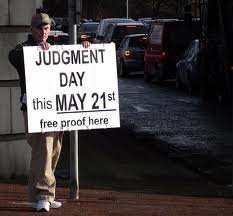
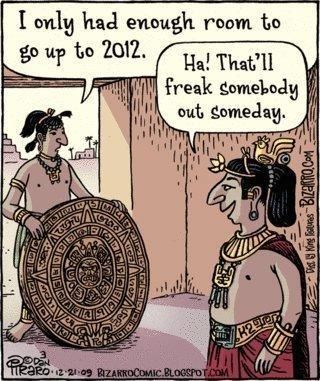
But this is not new. There have been soothsayers and Casandras down the ages who have predicted the end of the world anytime soon! It’s seems to be a response built into our human DNA i.e., to have fear of an ultimate cataclysm after all, we, as a species, are distinct from animals in that we have knowledge of our own death. In the 1960s you could espy everyday a man walking up and down Oxford Street in London carrying a giant placard reading “The End of the World is Nigh, Eat more Protein!”. Since then, various spiritual teachers of many different persuasions have warned their flocks that the expected end was due, naming a date and even a time and to depart for the high plateau with their families and possessions. The recent millenium was one of them. I won’t enumerate these spiritual groups or cults as there are so many but I am more interested in why there is a general upsurge at this particular time. Fed by the predictions of Nostradamus or the Mayan myth (or the misunderstanding of this myth – see cartoon below) and the various and many descriptions in the Prophetic traditions there has been a lot of talk. A lot of smoke but not much light.

Well known is a story of one of the sahaba – a companion of the Prophet. He asked the Prophet, peace and blessings be upon him, “when is the hour?“. The Prophet’s response was not to predict a day or a year but to say “What have you prepared for it?”. His advice was not to passively wait around for it, or even not to fear it, but to ask him a question about his active response to it. If only this almost palpable public fear that is around could meet with this kind of counsel, as right now it seems to be being brushed under the carpet.

If one was to examine the pronouncements of a guru, shaykh, whoever might be predicting the end, you would have to suppose that it was for a reason, a wish maybe to subdue their followers or maybe a well intentioned warning but without the Prophetic counsel illustrated above, disingenuous in my opinion. Fear after all is a great way to control people. So what happens when the fateful hour never arrives? Like the great millenium non-event. Red faces all round but did the followers turn round and say “we were cheated” or were they even a teeny bit embarrassed? No doubt some were disappointed. I’m interested to know their response as I have never heard it.

When Mount Vesuvius exploded and suffocated the city of Pompeii and Herculaneum in Italy under volcanic ash in the year 79 AD, it was evidently the end for 4000 of its inhabitants. Equally for Hiroshima, Nagasaki, Dresden, and Hamburg when fire destroyed hundreds of thousands in a matter of minutes. It occurred to me that there has been an increase in natural disasters and loss of life, like the the two great tsunamis, in the last decade, but compared to the last century not much in comparison to the multi-millions of deaths in its two great machine wars. If you consider that your own death is your own personal end of the world then, yes, the end of your world is nigh. Like possibly in the next ten minutes. Maybe the end of the world is really billions of little Ends of the Worlds. But one can only speculate. Biblical and Quranic descriptions of an ultimate apocalyptical cataclysm are mysterious but quite detailed – if there is a beginning to creation then there is most certainly an end to it. Why not? What has a beginning has an end. Doomsters often neglect to point out that the signs of the end of time have been around for a very long time – thousands of years in fact.

I’m sure when the people of Medina, in the year 1256 CE, heard of a great molten volcanic stream heading towards them, they considered it was the end of their world and a punishment from the Almighty. It is said that the night was so bright from the lava that you could read a book. Only their supplications and rapid repentance and of course the presence of its greatest resident turned the great stream of molten lava away from the city, actually uphill. The evidence is still there to this day some 12 km south east of the city. The lava tract is 70km long and 20km wide and is illustrated above (photo by Nabil Turner). Like Pompeii, these signs are there to remind us of how the end can come swiftly to some people but also how the ‘end’ can possibly be averted or at least postponed if people change their ways.

The end of time is very visible in Quranic and Hadith sources and I am no expert but I know out of choice many scholars of eschatology hesitate to discuss the subject, much as they wisely hesitate to go into stories, truths, rumours and myths about the Mahdi. Modern muslims who I have met remain confused about these subjects but all will have an opinion one way or another. The prophetic guidance is to assume that tomorrow is maybe your last but that if you were planting a tree, to continue planting it. Better, it seems, to be pre-occupied with positive action than to be mesmerised by speculative fear.

Posted in miscellaneous | Tagged , , | Leave a comment

LOL

Since starting this blog I know how jounalists feel who have to keep a weekly column going week after week, inspiration or no inspiration. So that they end up filling their columns with anything they can muster and often revert to ridiculous tittle-tattle about their dogs or confessional details about their own family secrets. I suppose if you get paid to do it you will find something to write and some journalist do pretty well at this.

I found Shazia Mirza’s column in the Guardian (last one in December 2010) actually very funny – funnier in fact that her actual stand-up shows which I have seen, but in which I thought she went on too much about facial hair! She is funny, but funnier I think when in the written word for some reason. You can sense that underneath her on-going friction with her family there’s actually a lot of love. Some time ago I emailed her to ask her whether she just invented the stories in her column about her family as they seemed so unbelievable (this was mostly what she wrote about), but no, it was all true she said. It got me thinking about  muslim comedians in general. I don’t mean imams with hooked hands or bufoons doing battle with western decadence but ones who actually are genuinely funny.

Stand-up bass player. Stand-up comedian.
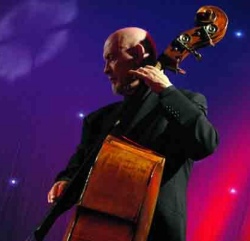
I mentioned Danny Thompson in my last post, who is well known as a virtuoso bass player who has accompanied just about every singer or musician you can name over a lifetime of professional work, touring and recording from Donovan to Rod Stewart via Nick Drake, Peter Gabriel and an endless list of musical stars. But also a muslim who takes it seriously.

He’s from Lambeth in South London and I’m not sure if he qualifies as a true Bow Bells cockney but he seems, to my ears, to have all the authentic patois. He likes to talk to his audience in concerts between songs and he is funny, in unexpected ways. To the extent that you would be forgiven for thinking he was a comedian doing a musical side-act. For instance, he will tell a personal story about himself to his audience which would lead them gullibly totally up the garden path, dropping them like a brick at the end of the story having told a total porky or just weaving his life into a pre-planned joke. He did it to me many times. He was as perfect a practitioner of rhyming slang as you will find anywhere south of the Watford Gap and a good china of mine. But unlike Shazia he doesn’t make jokes about muslims, as for him I doubt he finds anything funny about it, although I should add that Shazia’s humour about muslims wouldn’t or shouldn’t offend anyone. With a lot of self-satire she punctures cultural hypocrisy and religious humbug, which is much needed in a country where people are are trying to be just a little bit too correct. How people behave can well be the subject of humour as long as you don’t target peoples’ beliefs. It seems if you grow up in a muslim family the likelihood is that you will find a lot to laugh about, as religion plays a much bigger part in such families than in the typical secular British family. Religion will always be a subject of humour as it is a way people deal with their repressed real fears about life and death, marriage and children etc., which religion of course is all about and offers at root, explanation, consolation and of course salvation, we hope. Repressed emotions are always the target of humorists – the unspoken about uncomfortable truths. The fine line is crossed of course when you start to mock individuals or the religion itself. That pretty much conforms with the Prophetic example on humour as he, God bless him and grant him eternal peace, we know was very humorous, but never mocked people. Scholars have written whole books on Prophetic humour, none translated into English to the best of my knowledge, and is as important a part of his way as anything else of his. But when people lack humour – er, they lack humour. The term humour actually derives from the humoral medicine of the ancient Greeks, which taught that the balance of fluids in the human body, known as humours (Latin: humour, “body fluid”), control human health and emotion. So it is of vital importance to our well-being. So laughing out loud is good for you. But getting the balance wrong could be bad. So watch your step.

Some of my readers here might also be familiar with American muslim comedians Preacher Moss and Azhar Usman who comprise the comedy act Allah Made Me Funny. I saw them perform at the Islam Expo a few years ago in London. I must admit that Azhar’s particular kind of American humour didn’t really connect too easily with the admittedly cold UK audience as they didn’t really grasp the in-your face American style of comedy but African-American Preacher Moss did a lot better. He was just funny from the word go as he had the kind of timing the British do appreciate even if they don’t get his American references. Better not to advertise yourself as a religious comic I think, as it gets you off on the wrong foot. I talked with Preacher Moss and Azhar in the hotel where we staying near the Expo into the small hours and I have never laughed so much – in a hotel that is.

Understanding diversity and multiculturalism requires that we eliminate or reduce the anxiety of our ignorance and how to speak honestly when we can’t.” -Preacher Moss

Check the clip on this page:  http://www.youtube.com/watch?v=t2UslHb1TOg

Comedy is actually a very difficult art. Most comics seem to gain fame by means of shock and profanity and that is not something new but it’s a mistake to define your art in religious terms as if it will give you a leg up or some more credibility. Better to be just a good musician or and/or a good comic and let your beliefs percolate through your music or your comedy.

There are so many Jewish comedians who publicly explore the angst, neurosis, guilt and conflicts of being Jewish that I couldn’t number them here. Jackie Mason is one who is an ordained rabbi and a famous comedian as well. Azhar Usman mentioned above I believe is a trained imam. There must be a comedic Christian vicar somewhere. I’m no afficianado of the subject but one is all too aware of the whining but clever humour of Woody Allen and his social observations. Some loathe his New York humour and others love it, but you can’t fail but notice that he makes continual references to his Jewishness in almost every movie in a love-hate kind of way. And he often descends into a squalid self parody as he explores his own adulterous fantasies. It’s interesting that Muslims find it hard to sink to this level although Omid Jalali, who can be hysterically funny, gets near it at times. The film The Infidel (which starred Omid) broke all sorts of taboos in its treatment of Jews vs Muslims and Salafis vs the rest, which I thought quite healthy in the UK context, but to do this it also sank to a pretty low level. But I think he is sincere and speaks the truth when he can. He’s kind of big and cuddly. I felt mildly exhausted after that film as I do after many comedies as there is always the danger that laughing can leave you feeling quite spent. Which is why I have always loved the gentle genius of French director/actor Jacque Tati who never mocked people in his very light comedic movies like Monsieur Hulot’s Holiday and Jour de Fete. I’ve seen every film he made and they all leave you just feeling bemused and happy – they are not hysterical, but whimsical and humane observations of ordinary French society. Jewish comedy seems to have no limits to how low it can go which is why it has the been the fuel of many a Hollywood feature film. Breaking taboos has been their only means of getting a laugh but that just sinks the ship lower and lower in the water.

For me some of the best muslim scholars and speakers edge very near the standup comedians’ territory as such sensitive subjects as religion are perfect for turning a humorous phrase or lancing the tension that serious people bring with them to the religious conferences which we have all been to. After all, a standup comedian is rather like a religious preacher, exhorting people, like Preacher Moss’s rich observations – one seeking to awaken the spirit of the audience and the other to get a laugh. Some can do both. It seems only one chromosome separates them from each other. As I remarked in my previous rant about PA systems, all that magic is amplified now through gigantic speakers, massive video screens and of course disseminated to the world through TV and the internet. It’s powerful stuff.

Posted in miscellaneous, music | Tagged , , | 5 Comments

Goose pimples in Sarajevo

Today’s post is a special treat which I hope you can share with your friends. You will find here an (edited) chapter from my very own as yet unpublished bio (Average Whiteman) about a concert in Sarajevo fourteen years ago in 1997 that Yusuf Islam and myself appeared in.  I’ve also loaded up an mp3 of one song – Tashaffa Ya Rasulallah -from that concert that I sang with Burhan Saban, a wonderful singer and hafiz from the famous madrasa in Sarajevo. Burhan only heard this the day before the concert and does this amazing heart-rending prayer at the end. If there is a good response from this I can try to get the rest of this remarkable concert released as a CD or whatever. But do tell me.

Tashaffa Ya Rasullalah

Average Whiteman 254-260 edit

Posted in miscellaneous, music | Tagged , , | 21 Comments